

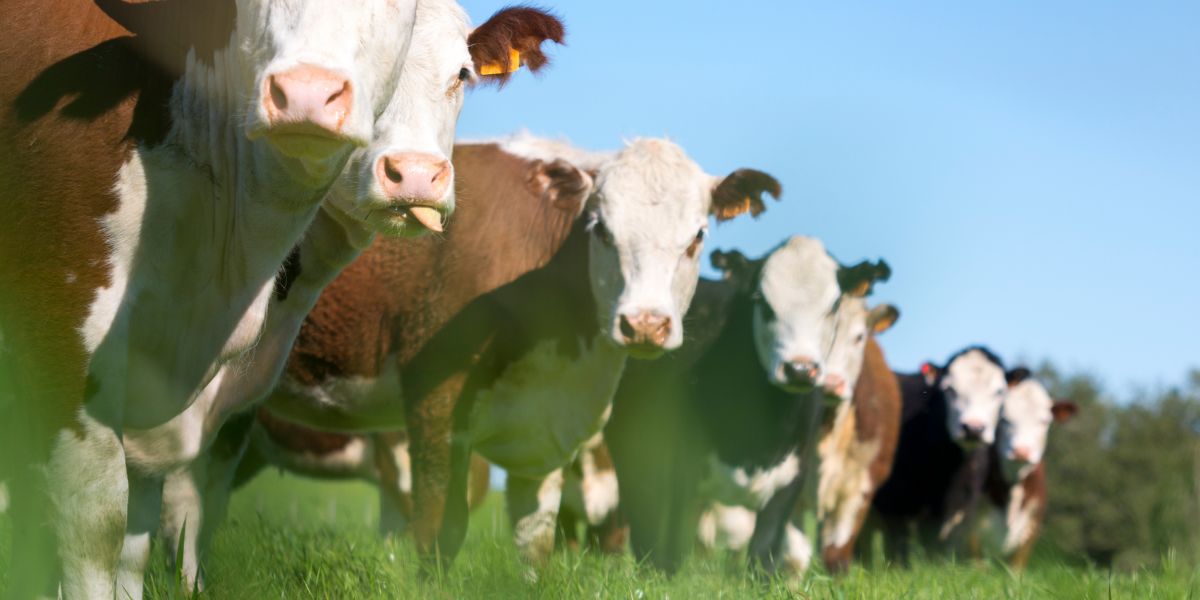
This practice of breeding Hereford has become increasingly popular among cattle breeders, because Hereford has several characteristics that allow you to obtain positive results. In this matter, you will know even better how this breed has excelled in the world of livestock and why it is so sought after by breeders.
Origin of Hereford breed
The Hereford breed is one of the oldest and most traditional breeds of cattle in England. It was bred from the natural selection of animals that survived the adverse conditions of the climate and soil of the Herefordshire region in the southwest of the country.The first reference to the breed dates from the XVI century, but it was only officially recognized in 1878, when the Hereford Cattle Society was founded.In the last 200 years, the breed has spread throughout the world and is today one of the most popular among beef cattle breeders.
Hereford breed characteristics
Hereford is one of the oldest and most popular breeds of cattle. Its history begins in England, where it was bred from the crossing of local animals with the claw imported from France. The breed has spread rapidly around the world and today is found on all continents.
The most striking feature of the Hereford breed is its large size.Males can easily reach 1000 kg and females are a little smaller, but still quite large. Another notable feature is its long, thick tails, which help them maintain balance when grazing. Herefords are also known for their good temperament, being a docile and easy to deal with animal.
The Hereford breed is extremely versatile and can be used for various purposes. Due to its size, it is very popular in rodeos and riding competitions.It is also used for meat production, being considered one of the best breeds for this purpose.In addition, it can also be used in milk production and as a working animal, especially on rural properties.
Advantages and disadvantages of the creation of Hereford
The Hereford breed is one of the oldest and most traditional beef breeds in England.It is known for its superior quality meat as well as its level of resistance to disease.
Advantages:
Hereford can produce large amounts of lean, tender meat that has a high nutritional value.
They have good overall health and are resistant to disease.
They tend to have fewer behavior problems, such as scratching and kicking, than other breeds of cattle.
They are relatively easy to handle and train, which makes it possible to create them in small batches.
Hereford cows are also dairy farmers, producing more litres per lactation than other breeds.
Disadvantages:
Hereford bulls are often large and heavy, which can make it difficult for breeders to deal with them.
They may be prone to health problems such as hip dysplasia, hoof problems and fetids.
They tend to produce a small tender size compared to other bovine breeds.This means that the breeder needs to sell more calves to get the same profit.
Improvements in the creation of Hereford
1. Improve Size & Likelihood People are looking for a breed of cattle that is larger than traditional Herefords, so we need to change the lineage to get bigger and heavier animals.
2. Improving meat quality & IS important to continuously improve Herefords meat quality.This includes improving meat flavor, softness and texture for consumers.
3. Increase disease resistance 'DO Through selective breeding, it is possible to breed Hereford cattle with greater resistance to disease and adverse weather conditions.
4. Reduce production costs & One of the main concerns in creating Herefords is the high cost of production
Conclusion
In recent decades, Hereford cattle ranching has had a great development in Brazil. The breed is one of the most adapted to Brazilian climate and soil conditions, besides being extremely rustic and productive.
Hereford breeding is an excellent option for those seeking a profitable and sustainable livestock activity. The breed has good feed conversion capacity, which ensures high meat yield with low investment.In addition, the meat of the breed is highly appreciated by Brazilian consumers.



