

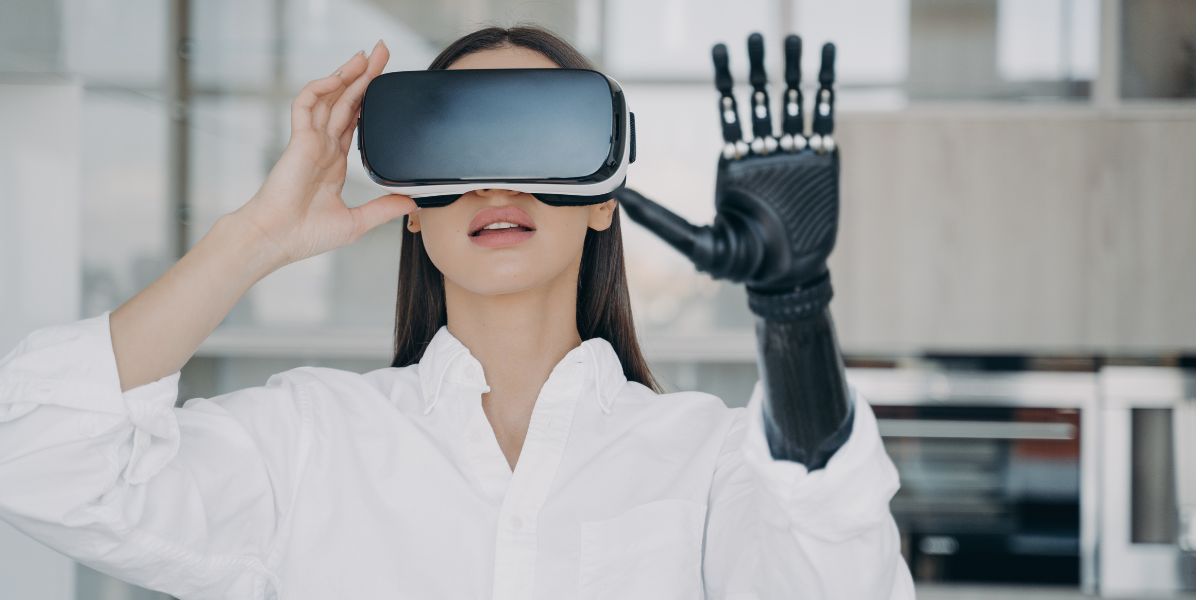
Have you ever imagined being able to train agricultural production without leaving home? With Virtual Reality technology, this is possible! In this post, we will talk about how this tool can be used to empower farmers and improve performance in the field. Find out how VR is revolutionizing agriculture and bringing more efficiency to the sector. Come with us on this virtual journey and explore all the possibilities of technical training in the digital age!
Introduction
Virtual reality is becoming increasingly present in our lives. Technological advances have allowed it to be used for educational, leisure and even professional purposes.In the field of agriculture, virtual reality can be a great ally in the technical training of rural producers.
Virtual reality allows farmers to experience, in a practical way, several situations that may occur on their properties. In addition, with technology it is possible to simulate different types of climate and terrain, which contributes to a more complete training of farmers. Another advantage is the availability of real-time information on planting and harvesting, as well as weather and agricultural market data.
With the use of virtual reality in the technical training of rural producers, it is possible to offer greater efficiency in the management of agricultural activities, improve productivity and obtain more satisfactory results. In addition, virtual reality brings benefits to the environment, as it allows farmers to make use of sustainable practices in food production.
The importance of technical training of rural producers
Technical training of farmers is important for the success of agriculture.With the help of technology, farmers can keep up to date on the latest cultivation techniques and land management.In addition, technical training also helps farmers to be more competitive in the market.
Virtual and augmented reality technologies as teaching tools
Virtual reality (VR) and augmented reality (AR) technologies are becoming increasingly popular and accessible, and this has aroused the interest of educators in using them as teaching tools. While VR can transport students to a completely immersive environment, AR can provide relevant information about the real world as people interact with it. Both technologies can be extremely useful in the technical empowerment of rural producers.
VR can allow farmers to experience situations in a controlled environment without the risk of actual harm. For example, a farmer can use VR to learn how to handle new equipment before using it in real life. RA, on the other hand, can provide step-by-step instructions on how to perform a task while it is performed. This can be particularly useful for tasks such as crop monitoring or plant disease diagnosis.
In addition, virtual and augmented reality technologies can be used to create richer educational experiences for students. For example, through VR, a farmer can visit other farms worldwide and see how they are managed, allowing him to compare practices between regions. AR can also make content more interactive by bringing virtual elements from the real world.For example, farmers can see real-time graphs of weather patterns as they walk through fields or receive information about specific plants based on their geographic location.
In short, virtual and augmented reality technologies offer enormous possibilities as teaching tools for rural producers.In addition to providing the technical training needed for the job, they can also create a more richly immersive educational experience that can stimulate students' curiosity.
How the use of virtual reality in the technical training of rural producers can help in the learning process
Virtual reality can be a great tool for technical training of rural producers. With technology, producers can immerse themselves in a simulated environment to learn about certain tasks or activities. This means that they do not have to leave their properties to participate in training, which can be quite difficult, especially in remote areas.In addition, with virtual reality, producers can repeat activities as many times as necessary until they feel safe enough to experience in real life.



