

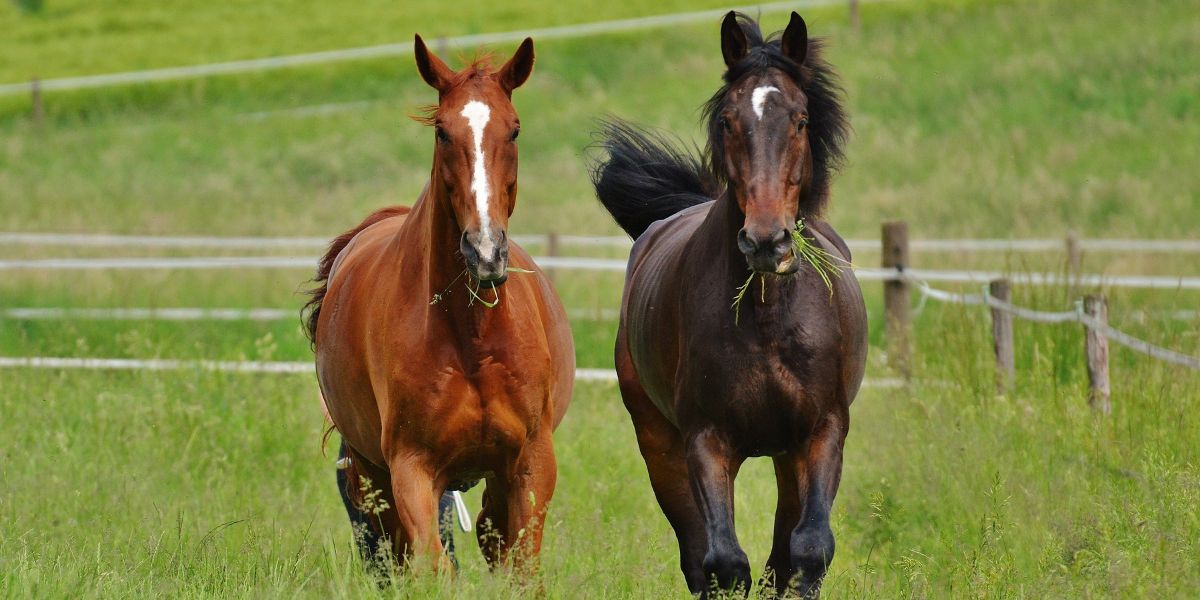
Welcome, horse lovers! If you are passionate about these majestic animals and everything that involves their breeding and care, this article is for you. Equine livestock has been a national passion for centuries, with deep roots in our culture and history. In this post, we will explore the charms of horse breeding in Brazil and understand a little more about this fascinating activity.Let's embark together on this journey!
The history of equine livestock in Brazil
Equine livestock has been present in Brazil since the time of the first settlers.The arrival of horses in South America happened around the XVI century, with Spanish expeditions that came to the continent in search of gold and other riches. Some animals managed to escape and mixed with the native horses, forming a new breed: the Creole.
From there, equine livestock was developing in the country, always linked to activities involving horses. In the XVIII century, the first hars were created and the breeds began to be improved in order to obtain stronger and more resistant animals. At that time, livestock was focused on the production of meat and leather, since there were no means of motorized transport.
With the emergence of railways in the XIX century, the demand for horses decreased considerably, but these animals continued to be used in rural areas where motorized transport was not yet very widespread.
In the XX century, equine livestock gained new momentum with the emergence of new breeds created for sports practice. Currently, the main activities related to equine livestock in Brazil are equestrian races and horse races, both amateur and professional.
Some of the breeds of horses bred in Brazil
Brazil is one of the largest horse breeders in the world, with more than 9 million horses. Brazilian equine livestock is responsible for about 30% of the world horse production, and horses are bred in all states of Brazil. The most bred breeds in Brazil are:
''American Paint Horse: one of the most popular breeds in the United States, the American Paint Horse originates from the American breeds of paint and pony. It is a beautiful and versatile horse, used both for riding and for work.
udo Mangalarga Marchador: the main characteristic of this horse is the marching gait, a special type of gait that makes the animal seem to be always in motion. It is quite popular in Brazil and is used for various activities, from walking to competitions.
0 Crioulo Lageano: another breed quite popular in Brazil, the Creole Lageano originates in Argentina and is known for its slow and smooth walking. It is used both for riding and for work and competitions.
izo de Pantanal: a Brazilian breed, very popular and versatile, which was created from the mixture between European and Spanish horses with indigenous animals from the Pantanal region.
: the Campolina is a Brazilian breed created from crosses between several European breeds with the aim of creating a sturdy and very agile horse. It is used in speed tests, jumps, training, walks and even in hipicas brazilian competitions.
The equine livestock market in Brazil
Equine livestock in Brazil has been increasingly strong and representative, both in the economy and in the culture of the country. With more than 3 million horses, Brazil is the third largest producer of equine meat in the world, behind only China and Argentina. In addition, Brazil is also the largest exporter of live horses, especially to Central America and the Caribbean.
Although equine livestock is an old activity in the country, it has gained strength in recent years due to the growing interest of the international market for the Brazilian product.
Currently, equine livestock is concentrated in the South and Southeast regions of the country, where there is a greater demand for equine meat and a climate conducive to activity. However, with the growth of international demand, farms are spreading to other regions of the country.
The equine livestock market in Brazil is very promising and has generated excellent results for Brazilian producers. The prices of horse carcasses have increased in recent years, which means that the gains of breeders are also positive.In addition, Brazil has made large investments in breeding programs to ensure the quality and continuous production of equine meat.
The prospects for equine livestock in Brazil
Equine livestock in Brazil is in full expansion, and this can be easily seen by the growth in the number of horses in the country. There are more than 3 million horses, which represents an increase of 30% over the last decade. This growth is being driven by the increase in income of Brazilian families, who are increasingly willing to invest in horses.
In addition, the country has one of the best infrastructures for the practice of riding, with numerous parks and hippodromes scattered throughout the national territory.This is not to mention the beautiful beaches of the Brazilian coast, which are great for horseback riding.
With all this, it is easy to understand why equine cattle breeding is such a popular activity in Brazil. And the prospects for the future are extremely positive.In the coming years, it is expected that the number of horses in the country will continue to grow and that new riding modalities will be created to meet the needs of Brazilian practitioners.



