

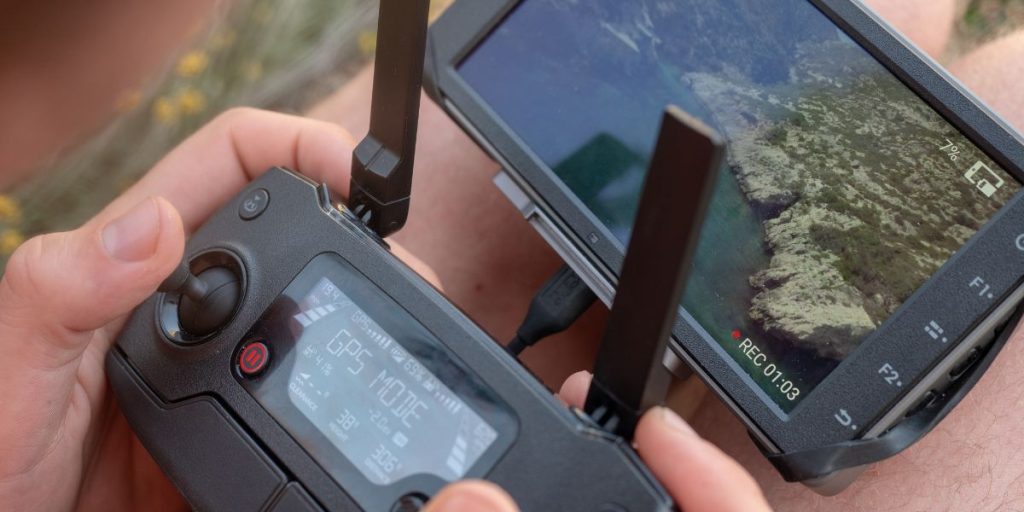
Did you know that using drones in livestock can be an effective solution to control predators? Drones are revolutionizing the way farmers deal with threats to their livestock, allowing them to monitor extensive areas and quickly identify possible attacks. In this post, we will explore how drones are used in controlling predators in livestock, their advantages and disadvantages.See on!
How are drones used for predator control?
Drones have been widely used in the control of predators in livestock.They are equipped with cameras and sensors that allow you to monitor an extensive area in real time, as well as quickly identify possible threats to the herds.
One of the main uses of drones in livestock is monitoring areas where animals graze.Drones can fly over pastures several times a day to detect the presence of predators such as wolves and foxes.
In addition, drones can also be used to locate injured or lost animals.With their privileged aerial view, they can cover large areas in a short time and quickly find an animal that needs help.
Another interesting application of drones is the use of infrared technology to detect the presence of animals at night. This tool can be very useful for farmers who face problems with nocturnal predators.
In summary, drones are an excellent option in controlling predators in livestock by allowing constant monitoring of areas where livestock graze and offering advanced technological features such as infrared vision.
What are the advantages of using drones for this purpose?
Drones are a relatively recent technology, but they have already become essential in many areas, including livestock.The use of drones in predator control has numerous advantages.
First, drones allow the monitoring of areas to be done more efficiently and accurately. With images and videos captured by drones, it is possible to identify the routes of predators and devise strategies to prevent their advance.
In addition, the use of drones reduces personnel costs. Previously it was necessary to have specialized teams in tracking and monitoring the area. Now this can be done with only one or two drone operators.
Drones fly quickly over large territorial expanses allowing them to locate dangerous animals in minutes rather than hours.
Finally, the use of these modern devices has considerably reduced environmental damage caused by old-fashioned methods such as traps or unnecessary poisoning: Environmental preservation also gains with this new technique.
The end result of these advantages is noticeable both for producers and their employees who can perform their activities with greater safety since they clearly know where the dangerous animals are without putting their own lives at risk are always protected by the clear view of the Drone throughout the operation.
Disadvantages of using drones in this context
Despite being an advanced technology and having great potential for predator control in livestock, drones also have some disadvantages that must be considered before their use.
One of the main limitations of drones is their flight autonomy. Most models available on the market have a maximum battery life of between 20-30 minutes, which may not be enough to cover large areas.This means that it would be necessary to perform several battery changes during a single job, thus increasing the total mission time.
Another important issue is the dependence of weather conditions for drone operation.Heavy rains, intense winds or fog can greatly prevent or hinder the performance of the work by unmanned aerial devices.
In addition, one should also consider the high costs involved in the purchase and maintenance of drones. The equipment is relatively expensive and requires special care to ensure its effectiveness and safety in all operations performed.
In summary, despite the advantages offered by drones in the control of predators in livestock, the disadvantages related to battery life, adverse weather conditions and high costs involved should be taken into account before making a decision regarding their use in this specific context.
Conclusion
In conclusion, drones have been shown to be an effective tool in controlling predators in livestock. They allow greater accuracy and speed in identifying the animals that are attacking livestock, as well as enabling more constant monitoring of the area.
However, it is important to remember that the use of drones for this purpose also presents challenges and limitations. The cost can still be high for many farmers and the need for trained professionals to operate them should be considered.
Despite this, it is clear that the use of drones in livestock can bring numerous benefits to both herd health and financial for producers. With technologies constantly evolving, we can expect to see even more advances in this area in the coming years.



