

 Introduction
Context of the livestock sector and the role of new technologies
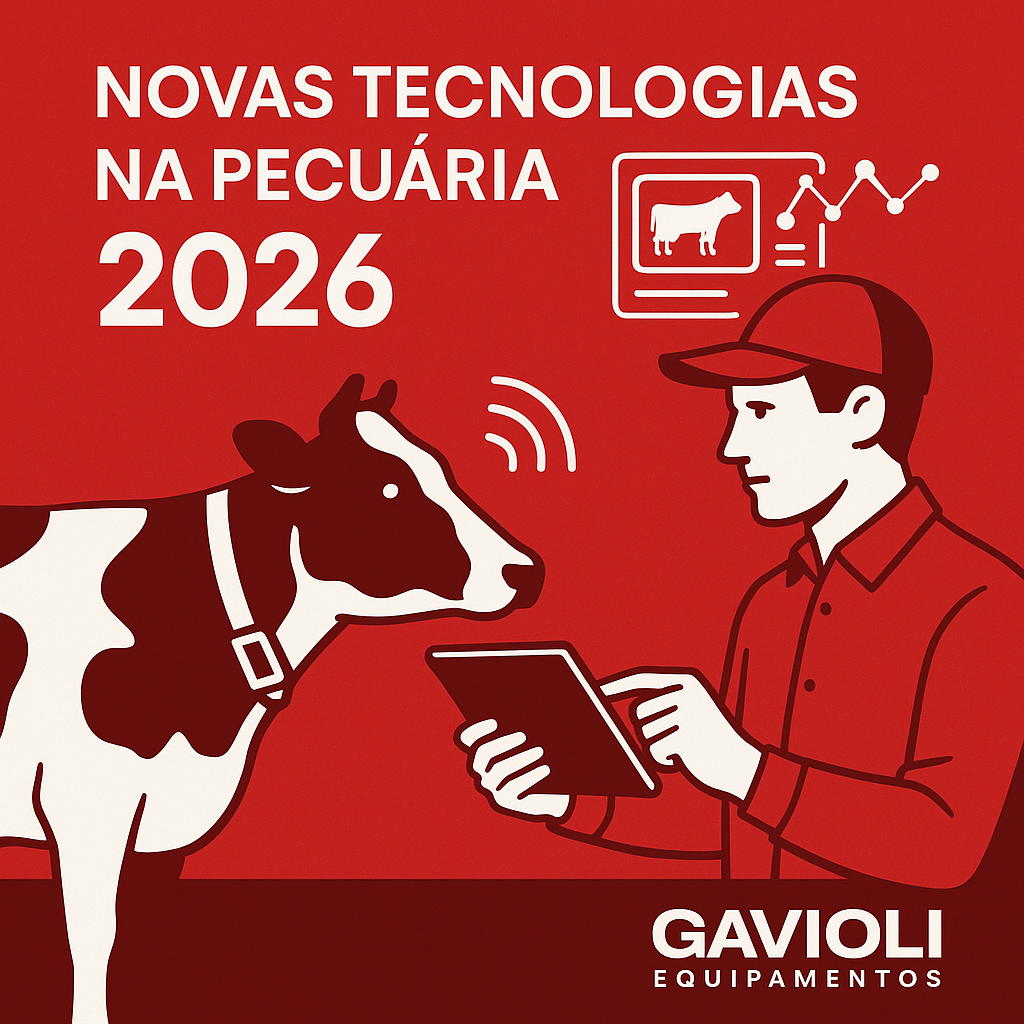
In Brazil and Latin America, livestock farming faces challenges of efficiency, animal welfare and sustainability. Emerging technologies act as allies to reduce costs, increase productivity and improve the quality of the final product. Our portfolio focuses on solutions that connect the field to digital, focusing on rural practice.
Innovation brings concrete results: automation, connectivity and data that guide decisions real-time monitoring system identifies sick animals integration between machines, sensors and digital platforms makes operations more predictable, with fewer interventions in repetitive, high-risk tasks.In practical terms, implement simple sensors on pickets to collect daily temperature, hydration and weight data.
Overview of the 2026 trends in livestock
- Tractors and autonomous machinery for livestock management
- Monitoring and application drones in livestock
- IoT sensors for sanitary and financial management
- Artificial Intelligence for herd welfare
- Intelligent bio-inputs and precision nutrition
- Digital platforms for agricultural management
- Robotics management and automated containment
These elements make the field more predictable and safe. Gavioli Equipamentos offers practical, tested solutions that fit the day to day of the producer.
1. Tractors and autonomous machinery for livestock management
Main functionalities
Autonomous livestock management machines combine precise navigation, embedded sensors and simple interfaces.They perform activities such as pasture management, feed supply and monitoring of floor areasreducing dependence on constant human presence.
Key functions include GPS guidance, real-time telemetry, obstacle detection, automatic power recharge and integration with digital management platforms.
Operational benefits and cost reductions
- Continuous operation: repetitive tasks performed accurately, including off-hours.
- Reduction of labor: less direct interventions, freeing up resources for higher value activities.
- Management consistency: standardized patterns reduce variations between batches of animals.
- Efficiency in the use of inputs: targeted application of feed, management of areas and access control.
- Integration with data: task history, animal movement and pasture metrics consolidated in dashboards.
2. Monitoring and application drones in livestock
Applications in pasture management, tracking and herd management
Drones help monitor the condition of pastures accurately.For example, on a 500-hectare property, a fortnightly flight can reveal underutilized areas and guide the rotation of pickets to prevent overgrazing.
For herd tracking, use planned trajectories that cover feeding and water routes.On a dairy farm, monitoring night shifts may indicate need for additional water or shelter adjustment for cold.
With multispectral cameras and thermal sensors, it is possible to detect water and thermal stress in sensitive species, such as young cattle.In areas with seasonal drought, this allows to relocate wetter pastures and reduce weight losses.
Embedded technologies and integration with digital farms
Models with high-precision GPS, thermal vision and wind sensors provide stable flights.In farms with multiple properties, integration with digital platforms consolidates field data into a single management plan.
Route automation, flight scheduling and centralized telemetry make management easier, allowing you to trigger alerts when ground cover falls below a critical threshold.
- Set local goals, choose suitable sensors, and schedule monthly flights to compare data with the latest pasture inventory.
- Best practice: combine NDVI data with temperatures to map stress areas and prioritize interventions.
- Common risks: sensor calibration failures on cold days or with unpredictable wind curves.
| Aspect | Benefit | Usage examples |
|---|---|---|
| Pasture management | Coverage mapping, identification of underutilized areas | Evaluate lots and plan pasture rotation |
| Herd tracking | Detection of animals away, monitoring of displacement | Daily tracking, quick response to absences |
| Integration with digital farms | Centralized data, more agile decision making | Management dashboards, automated alerts |
3. IoT sensors and Internet of Things in financial and health management
Sensors in water currents, food and animal management
Installing sensors in water sources, silos and feed areas allows continuous monitoring of availability, quality and consumption. These data help to avoid waste and plan replacement with greater precision. Sensors in animal tags help track location, activity and well-being without stress.
The integration of these sensors with digital platforms creates a real map of consumption and circulation in the park, simplifying audits and inventory controls.
Predictive analytics for health and performance
Predictive analytics models use real-time readings to identify patterns that precede health problems or performance declines. From historical data, temperature, humidity, and eating patterns, it is possible to predict interventions before serious occurrences occur.
Insights generate automated responses, such as feed adjustments or alerts to teams optimizing the time of producers and increasing the predictability of operations and reducing unforeseen costs.
4. Artificial Intelligence applied to herd welfare
Stress and disease detection algorithms
AI analyzes behavior patterns and vital signs to identify heat stress, pain, or illness before they become severe. Models learn from histories of weight, feeding rhythm, and locomotor activity.
AI-powered wearables and cameras enable continuous surveillance, reducing diagnostic delays without requiring constant human intervention.
Automation of management decisions
Algorithms suggest management adjustments based on real-time data.They learn from results of previous interventions to indicate feeding, stocking modulation and management schedules.
They integrate with digital management platforms so that when detecting a trigger, the system performs standardized actions or alerts the team with clear instructions.
| Aspect | Benefit | Usage examples |
|---|---|---|
| Detection | Early identification of stress and illness | Monitoring of behavior, vital signs and images |
| Action | Recommends data-driven management decisions | Adjustments of feeding, stocking and schedules |
5. Intelligent bioinputs and precision nutrition
Innovations in nutritional and beneficial microorganisms
Bioinputs go beyond chemical substitution.In pests, they act with plant and livestock nutrition, increasing efficiency without increasing cost.For example, applications on a corn farm can use microorganisms that release phosphorus slowly, reducing the need for synthetic fertilizers.
In livestock, bioinputs modulate ruminal microbiota, improving fiber digestibility and decreasing emissions.In a beef herd, combining these products with high-performance protein additives can reduce feedlot time and improve feed conversion.
Impact on productivity and sustainability
- More efficient use of energy and protein, with visible results in 6 to 12 weeks
- Reduction of waste and environmental footprint by batch segmented application
- Stable formulations that maintain performance in temperature variations
- Practical examples include dosage by age, weight, and function of the animal
| Aspect | Benefit | Usage examples |
|---|---|---|
| Intelligent bioinputs | Integration with plant and animal nutrition | Better nutrient availability, less dependence on chemicals |
| Beneficial microorganisms | Microbiota modulation, higher digestibility | Supplements for ruminants, soil additives |
6. Digital platforms of agricultural management
Traceability, decision making and data integration
Field sensors, water tanks, feed hoses, animal handling and connected machines create a single layer of operational information. This stream makes it easy to track consumption, weight and compliance in real time.
To avoid rework, implement data curation standards: guide who can edit, standardize units and timestamps, and maintain a metadata catalog.
Use cases in beef and milk livestock
- Practical example: daily weight gain dashboards with warning triggers for falling above 0.5 kg in 3 days, allowing immediate diet adjustment.
- Lot source tracking with batch code, entry date and health certificate, facilitating quick recalls.
- Rain and pasture management with meteorological data and forage availability, guiding the stocking and rotation of paddocks.
| Aspect | Benefit | Usage examples |
|---|---|---|
| Data integration | Unique view of the farm | Synchronization of sensors, machines and ERP with data validation |
| Traceability | Complete traceability of the animal and inputs | Records of origin, management, sanity and stocking |
| Applied AI | Quick and informed decisions | Health checks alerts, management recommendations and stock planning |
7. Robotics for animal management and automated containment
Stress-free containment, weighing and hygiene solutions
Robotic solutions allow temporary containment without straining animals, reducing injuries and stress.Integrated weighing systems track weight gain in real time during daily handling.
Automated hygiene devices promote asepsis without the need for manual intervention. Automation facilitates sanitization operations with less human intervention and greater consistency.
Benefits for well-being and productivity
- Reduction of stress and risk of injury in animals during management
- Accuracy of continuous flow weight, body condition and health data
- Better stocking control and operational efficiency
- Safer operation for workers, with less exposure to risky situations
| Aspect | Benefit | Usage examples |
|---|---|---|
| Automated counting | Reduces stress and stress for the animal | Motorized doors and fences with sensors |
| Integrated weighing | Assessment of weight gain without displacement | Fixed scales in the management line |
| Automated hygiene | Consistent and safe procedures | Cleaning system with automated drive |
FAQ
Which technologies should gain more adoption in 2026 in livestock?
Operations automation, connected sensors and AI applied to daily management should gain ground.On farms with integration to existing platforms, adoption is faster and supervision is centralized. For example, a producer can use an automatic replacement system of safeguards for pastures, connected to a single panel.
How to select technologies for my production
Evaluate the scale of operation, labor availability and compatibility with current systems. Prefer solutions with local support, authorized service and continuous updates.Start with a pilot from 60 to 90 days in a critical step, such as weight monitoring and precision feeding.
Does Agrishow 2026 influence the daily life of the producer?
Events like Agrishow often reveal practical releases that arrive quickly in the field. Observe live demonstrations and ask for real use cases, such as reducing feed cost by 8% with precision feeding.
What practical benefits can be expected?
Improve productivity, more efficient use of inputs, real-time monitoring and faster decisions with centralized data. Set measurable goals, for example, reducing feed waste by 10% in the first 6 months.
Which areas of livestock are most impacted?
Herd management, precision feeding, animal welfare and traceability gain relevance with digital platforms, sensors and drones.In the field, implement automatic weighing sensors to minimize manipulations and improve batch management.
Conclusion
Innovations in 2026 are moving towards an increasingly integrated field, with automated machines, data and decisions working together.
In practice, the adoption of technologies such as drones, IoT sensors and digital platforms turns daily management into a cycle of continuous improvement.
-
- Prioritize solutions that connect to systems already used on the farm, reducing the deployment curve.
- Look for suppliers with local support and parts availability in the region.
- Consider impacts on animal welfare, team safety and sustainability.
Gavioli Equipment follows launches presented at industry fairs and the practical needs of the field. Our portfolio aims to facilitate the transition to livestock 4.0 with a focus on sustainable productivity.



