

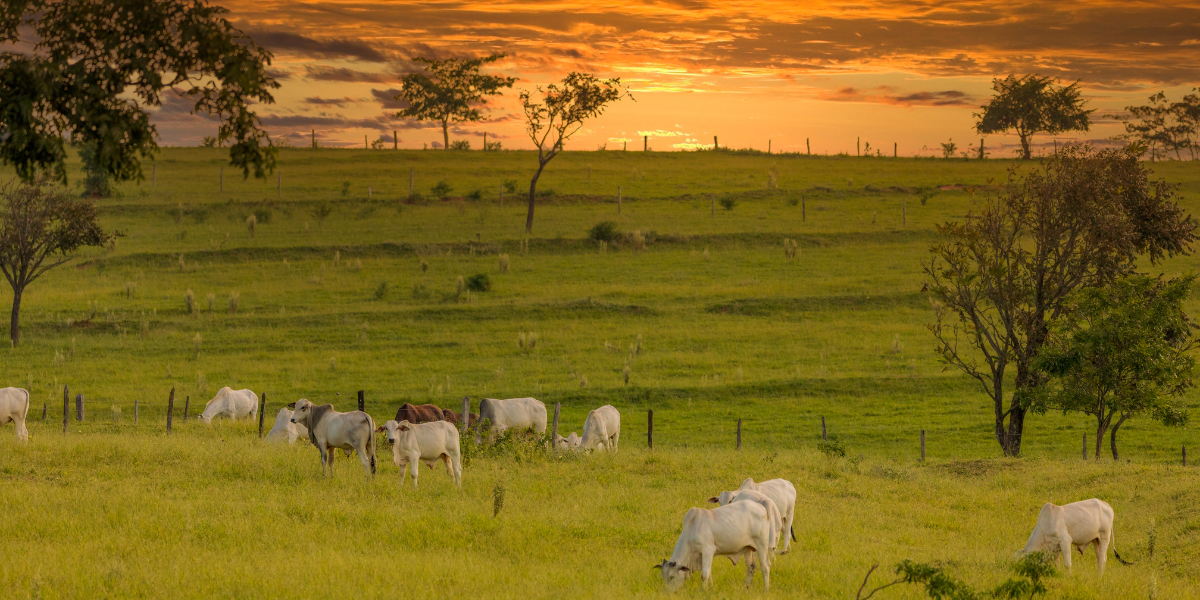
Livestock farming is almost as old as Brazil itself. For more than a century, cattle ranching in Brazil has had a great impact on the economy, history and culture of the country. Livestock in Brazil has its own sense of pride and is highly valued by the entire nation. In this article, we will focus on the history of livestock farming in Brazil, including its origin, how it evolved over time and what were its main social impacts. In the course of this article, we will also present some perspectives on livestock farming in Brazil.
The Origin of Livestock in Brazil
Livestock in Brazil emerged at the beginning of Portuguese colonization, when large herds of sheep were brought into the territory. In 1530, the first herd was registered in Rio de Janeiro. As time passed, livestock expanded to other parts of the country.The Brazilian people quickly developed the skills necessary for raising animals for agricultural purposes, thus creating a strong tradition of livestock. Although the initial animals used for livestock were mainly sheep, buffalo and horses, soon other animals entered the scene, including cows, goats, horses and donkeys.
Historical Evolution of Livestock in Brazil
During the XVIII century, cattle ranching in Brazil enjoyed a great boost with the beginning of the export of cattle abroad. The most popularly exported cattle was zebu, originating in Africa, and was brought to Brazil by the Portuguese. From there, livestock played an important role in the Brazilian economy, becoming one of the main drivers of Brazilian industrialization.In the early XX century, livestock became even more important for the Brazilian economy with the export of meat, leather and wool to other countries.
The Social Impact of Livestock in Brazil
In addition to its important role in the Brazilian economy, livestock also had a broad social impact in Brazil.For many years, it was one of the most profitable jobs for landowners in this region, resulting in a large number of people who depended on this industry to live. Livestock also caused a great interest in the Brazilian cultural heritage, maintaining the tradition and history of this nation.
Prospects for Livestock in Brazil
Over time, Brazilian livestock has faced several challenges, mainly due to environmental degradation and declining land quality. Despite this, livestock is still an important economic driver for Brazil.Huge investments in technology are being made to improve livestock productivity, resulting in a greater profit for Brazilian producers.In addition, research is being conducted to develop modern technologies that help improve the efficiency and quality of meat and dairy production.
Higher authority on the subject, livestock in Brazil is an important source of pride and tradition for the entire nation.For many years, livestock has played an important role in the Brazilian economy and has also had a huge social impact.Although it has gone through difficulties, livestock still represents a lucrative opportunity for Brazil, and major investments in technology are being made to ensure the long-term success of this industry.



