

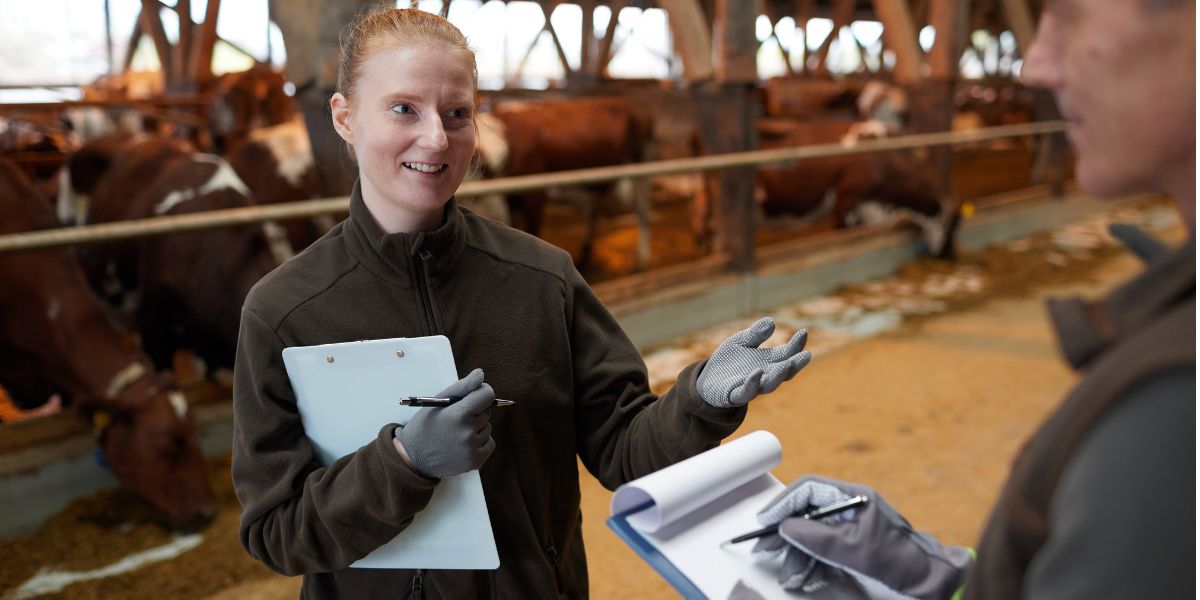
Livestock is one of the most important sectors of the Brazilian economy and, in times of crisis, it becomes even more evident the need for innovation and technology to ensure its sustainability. Currently, technology has been transforming the way producers deal with livestock, from food to health monitoring. In this post, we will discuss the importance of technology for livestock in times of crisis and how it can help in maintaining the business even in the face of economic adversities. Come with us on this journey for the digital revolution in the field!
The importance of technology for livestock
Livestock is a sector that has suffered from the economic crisis, but still manages to maintain itself. Technology has been a great ally for farmers, as it allows access to information and new production techniques.
With technology, farmers can have access to information about market trends, which allows them to adapt to changes and be able to sell their products. In addition, technology also helps in livestock logistics, as it is possible to track animals and ensure that they arrive in good condition to the final destination.
Technology has been essential for livestock in recent years and this only tends to grow. It is important that farmers invest in technology to ensure that their production is efficient and profitable even in the face of crises.
The technology also allows farmers to reduce costs with medicines, food and monitoring of animal health.In addition, the technology allows farmers to have access to solutions for disease control, thus preventing greater losses.
Finally, it is important to highlight that technology is fundamental for the modernization of livestock, as it allows greater control of activities in the field, optimizing time and resulting in substantial savings for rural producers.
In short, it is clear that technology has become extremely important for livestock in recent years, especially in times of crisis. Investments in this area are fundamental to ensure the sustainability of the sector and the success of rural producers.
Types of technologies used in livestock
Technology is essential to the success of livestock farming as it allows farmers to adapt to market changes and climate adversities.With the advancement of technology, farmers have access to new tools and techniques that can increase productivity and efficiency.
The main technologies used in livestock are:
(GIS): GIS enable farmers to better plan and manage their farms by monitoring soil, climate and pasture conditions.
thermal cameras: thermal cameras are used to monitor animal behavior, detect disease early, and assess stress in real time.
drones are becoming increasingly popular in agriculture as they allow farmers to survey land, monitor pastures and even image analysis to detect disease.
RFID Technology: RFID (Radio Frequency Identification) technology is used to identify and track animals, improving the safety of livestock, reducing costs and providing accurate data on the state of animals.
^robotics: Robots are being developed to help farmers feed animals, clean facilities and perform laborious tasks.
Management information systems: allow better control of production, stock of inputs, finances and human resources; and
Production systems: make it possible to continuously monitor animal health, climate in the breeding environment and feed quality;
Biotecnology: its main objective is to improve the genetic characteristics of animals through selection assisted by molecular markers;
Remote sensing: uses sensors embedded in unmanned aerial vehicles (UAVs) to assess the state of pastures and herd;
Food automation: reduces labor costs and keeps animals feeding properly.
Benefits of technology for livestock
Technology is increasingly present in farms and small farms. The benefits of technology for livestock are numerous, from increasing productivity to reducing costs.
With advances in technology, farms can more efficiently monitor planting and harvesting, and have greater control over the herd.
In addition, technology also allows farmers to stay informed about the latest news in the sector. With this, it is possible to make better decisions regarding crops and livestock management.
Technology challenges for livestock
Technology plays a key role in modern livestock farming.Every day, farmers have access to new tools and techniques that improve productivity and profitability of the business.However, even with all these advantages, technology also presents some challenges for ranchers.
The first major challenge is the high cost of new technologies. Many products are expensive and may not be affordable for all farmers.In addition, many products need constant maintenance and upgrade, which can represent an additional cost.
Another major problem is the lack of knowledge about new technologies.Many farmers do not have the time or resources to familiarize themselves with the latest innovations.This means that they may not be using their tools in the most effective way.
In addition, data security is another important challenge.Farmers need to make sure that their information is being stored securely as it could be targeted by hackers or data leaks.
Finally, new technologies can generate a massive amount of data that farmers have to process and understand. This can be extremely complicated and time consuming to figure out how to use this data to improve their productivity.



