

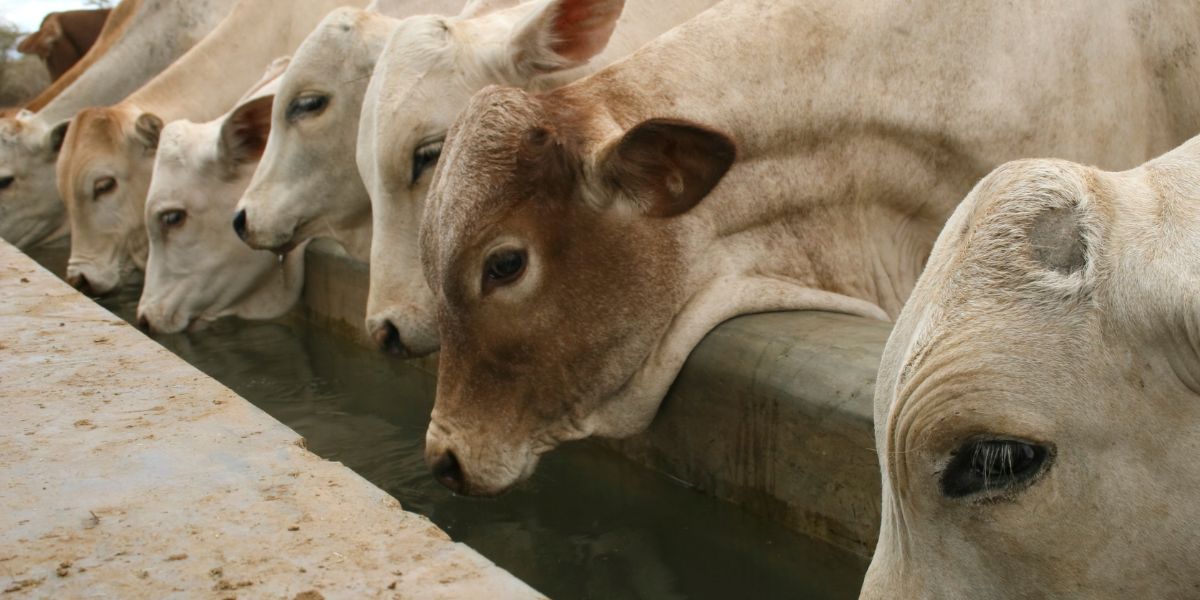
Livestock farming has been part of our culture for centuries, but did you know that it can have a great impact on water? True! Meat and milk production requires large amounts of water and can pollute rivers and lakes. In this post, we will explore the relationship between livestock and water, analyzing how this activity affects the consumption and availability of this resource so important to us. Come on?
The impact of livestock on water
Livestock is an activity that has a great impact on water. Animals need large amounts of this resource to survive and produce meat and milk. It is estimated that beef production requires, on average, 15 thousand liters of water per kilogram! Already milk production can reach spend up to 1,000 liters per liter.
In addition, the production process of livestock generates waste that can pollute rivers and lakes, further compromising water quality. The excreta of animals contains high concentrations of nitrogen and phosphorus, essential nutrients for plants but harmful to water sources when in excess.
Importantly, producers often use pesticides in pastures where animals are raised. These chemicals can infiltrate the soil and contaminate nearby water sources.
Therefore, it is essential to adopt sustainable practices in livestock in order to reduce or minimize their negative impact on water. The rational use of water resources should be prioritized at all stages of the production process of animal activity.
The relationship between livestock and water consumption
Livestock is an activity that demands a great consumption of natural resources, including water. Cattle need water to drink and also for food production, since many rations are prepared with this resource.
The figures are impressive: according to data from the Food and Agriculture Organization of the United Nations (FAO), about 70% of the water used in the world is currently destined for agriculture, with more than half of this volume being used by livestock.
However, it is worth remembering that not all water consumption by livestock happens directly by animals. The production of grains and forages also consumes a large amount of this precious water resource.
Some studies indicate that the way the farms are conducted can influence the amount of water needed. With appropriate soil and animal management techniques, it can significantly reduce total consumption.
In any case, it is important to highlight that the relationship between livestock and water consumption needs to be taken into account when thinking about environmental sustainability. It is necessary to seek responsible practices to ensure the availability of this essential asset in the future.
The relationship between livestock farming and water pollution
Livestock farming is an important economic activity in many countries, but it can also have serious environmental consequences.One of the main concerns related to animal husbandry is water pollution.
The main cause of water pollution by livestock is the runoff of animal waste to rivers and lakes. This may include food debris, feces and urine.When these wastes enter the water, they can cause an increase in nutrient levels that promote the overgrowth of algae and other aquatic plants.
This process is known as eutrophication, and can lead to the phenomenon known as “red red tide”. Red tide occurs when algae grow so rapidly that they consume all the oxygen dissolved in the water, suffocating fish and other aquatic organisms.
In addition, the excessive presence of nutrients can also make water unsuitable for human or animal use. Ingestion or contact with this contaminated water can lead to serious diseases.
Finally, water pollution from livestock can also negatively affect local ecosystems.Native species can be displaced by invasive species that benefit from increased nutrients in the water.
It is important to consider these environmental impacts when choosing our animal protein sources. Adopting sustainable farming practices can help reduce the impact of livestock farming on water pollution.
The impact of livestock farming on water availability
Livestock farming has a major impact on water availability around the world.From overconsumption to water pollution, the effects are felt in many communities around the planet.However, with the application of sustainable and conscious practices, it is possible to mitigate these damages and ensure that water remains a vital source for all.
It is up to cattle farmers to adopt measures to reduce water use in livestock activities, such as investing in more efficient technologies in animal management and irrigation of pastures.In addition, the authorities must also commit to supervise the practices developed by producers and establish public policies aimed at preserving water quality.
Finally, each individual can contribute to reducing the negative impacts of livestock on water availability by adopting more responsible habits in relation to meat consumption. Opting for conscious consumption is an important way to help in the conservation of the natural resources of our planet.
With this we can see that there is still much work ahead when we talk about this very complex issue involving two fundamental areas: agriculture and the environment. But we are certainly moving towards collective construction to minimize the damage caused by livestock to our precious world water source.



