

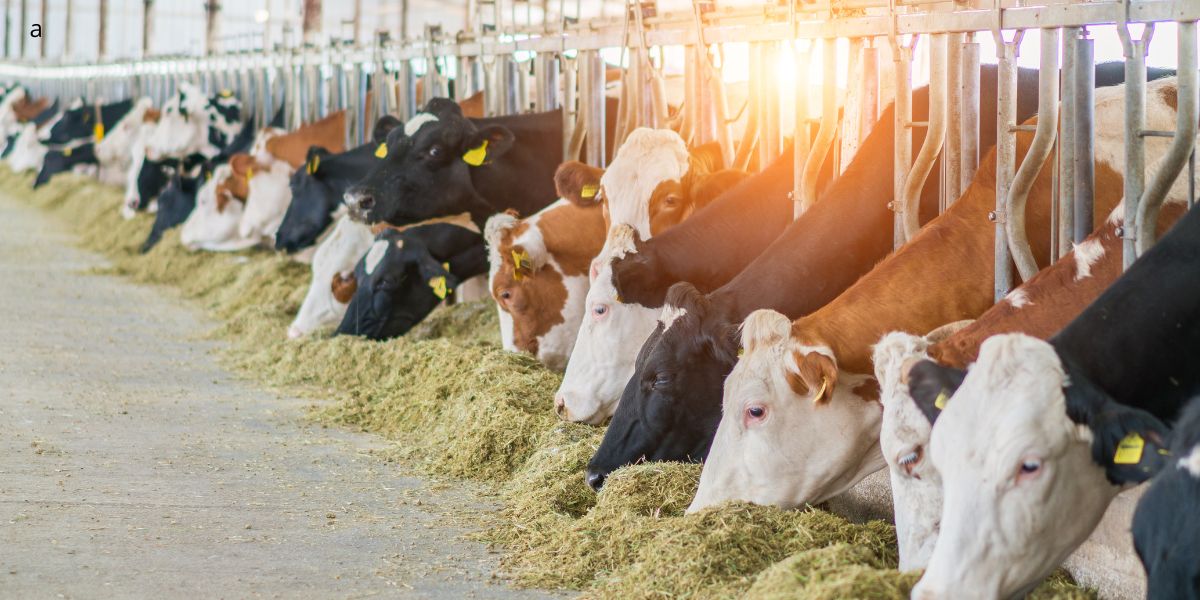
Vertical agriculture and hydroponics are modern cultivation techniques that have gained ground in the production of food for human consumption. However, these techniques can also be applied in animal feed, especially in livestock.
Vertical agriculture is a technique that consists of growing plants in vertical layers, in closed structures, controlling light, temperature and humidity. Hydroponics is a cultivation method that uses water as a means of cultivation, instead of soil. These techniques can be applied in the production of animal feed, bringing several benefits, such as reducing water use and producing healthier and more nutritious food.
In this article, the main concepts of vertical agriculture and hydroponics applied in animal feed in livestock will be presented. The benefits of these techniques will be discussed, as well as the main animal species that can benefit from this type of feed.
Fundamentals of Vertical Agriculture
Definition & Principles
Vertical farming is a cultivation technique that uses vertical spaces to produce food. This technique is based on principles such as the use of artificial lighting technology and hydroponics systems, which allow the cultivation of plants indoors without the need for land or natural sunlight.
Vertical farming is a solution to the lack of space and the need to produce food more efficiently and sustainably. The technique can be applied in urban areas, where land is scarce, and in remote regions, where the climate is unfavorable for growing plants.
Benefits & Efficiency
Vertical farming offers several benefits over traditional farming. One of the main benefits is space saving. The technique allows the cultivation of a large amount of food in a small space, which is especially important in urban areas.
In addition, vertical farming is more efficient in terms of resource use, such as water and energy. Hydroponics systems used in the technique allow the use of less water than traditional agriculture, while artificial lighting technology consumes less energy than natural sunlight.
Comparison with Traditional Agriculture
While vertical farming offers many benefits, it is not a perfect solution to all the problems of agriculture. The technique can be more expensive than traditional farming, especially in relation to the costs of building and maintaining cropping systems.
In addition, vertical farming may have limitations regarding the type of cultivation. Some plants may not be suitable for indoor cultivation, while others may require more light or space than is available in vertical farming systems.
Despite these limitations, vertical farming is a promising technique for food production, especially in urban areas and remote regions.With the use of advanced technologies and efficient farming systems, vertical farming can help ensure food security and environmental sustainability in the future.
Hydroponics in Animal Feed
Concepts & Methods
Hydroponics is a technique of growing plants without soil, where the roots are immersed in a nutrient solution.In animal feed, hydroponics is used to produce high-quality, nutrient-rich and contaminant-free forage.
There are different hydroponics methods, including the NFT (Nutrient Film Technique) system, where the nutrient solution is recirculated in a shallow channel, and the drip system, where the solution is applied directly to the roots of plants.
Advantages in Livestock
Hydroponics in animal feed has several advantages over traditional methods of forage production. First, hydroponics allows the cultivation of plants indoors, which increases the availability of food throughout the year.In addition, hydroponics allows precise control of plant nutrition, which results in high quality forage, rich in nutrients essential for animal development.
Another advantage of hydroponics is the reduction of water and space use compared to conventional forage production. This is especially important in regions with water scarcity and where space is limited.
Types of Hydroponic Cultures for Feed
There are several hydroponic crops that can be used in animal feed, including alfalfa, clover, corn, oats and barley. The choice of crop depends on the nutritional needs of the animals and the availability of seeds.
Hydroponic alfalfa, for example, is an excellent source of protein and fiber for large animals, such as cattle and horses. Hydroponic clover is rich in calcium and phosphorus, essential nutrients for the bone development of animals.
In summary, hydroponics in animal feed has several advantages over traditional methods of forage production. The choice of hydroponic culture depends on the nutritional needs of the animals and the availability of seeds.
Implementation of Vertical Agriculture in Livestock
Vertical agriculture is a technique that has been shown to be increasingly viable for food production.In livestock, the application of this technique can bring several benefits, such as reducing the space needed for animal husbandry, improving the quality of food produced and reducing environmental impact.
Structure and Equipment Required
For the implementation of vertical agriculture in livestock, it is necessary to have an adequate structure, which allows the cultivation of plants in layers. In addition, it is necessary to have specific equipment, such as lighting and irrigation systems, to ensure healthy plant growth.
Resource Management and Sustainability
Resource management is an important aspect in the implementation of vertical agriculture in livestock. It is necessary to have a strict control of the amount of water and nutrients used, in order to avoid waste and ensure the sustainability of the system.
In addition, it is important to consider using renewable energy sources, such as solar, to reduce the environmental impact of production.
Cost-Benefit Analysis
Before implementing vertical farming in livestock, it is important to conduct a cost-benefit analysis. It is necessary to consider the costs of installation and maintenance of the system, as well as the expected benefits, such as reducing the space required for animal husbandry and improving the quality of the food produced.
With careful analysis, it is possible to determine whether the implementation of vertical farming in livestock is feasible and what the expected return on investment.
Technologies & Innovations
Environmental Automation and Control
Vertical agriculture and hydroponics for animal feed in livestock have benefited greatly from automation and environmental control.With the help of sensors and control systems, it is possible to automatically monitor and adjust temperature, humidity, lighting and other environmental factors that affect plant growth and animal health.
In addition, automation also enables accurate dosing of nutrients and dietary supplements, ensuring that plants and animals receive the proper amount of nutrients to grow healthy and strong.
Monitoring and Big Data
Another technology that has been widely used in vertical farming and hydroponics is monitoring and data analysis.With the help of sensors, cameras and other technologies, it is possible to collect a large amount of data on the growing environment and the behavior of animals.
This data can be analyzed using machine learning algorithms and other data analysis techniques to identify patterns and trends that can be used to improve production efficiency and productivity.
Recent Advances
In recent years, vertical farming and hydroponics for animal feed in livestock have seen many technological advances and innovations.Some of these advances include:
- New plant varieties that are more resistant to diseases and pests, and that produce faster and more efficiently.
- High energy efficiency LED lighting systems that consume less energy and produce less heat.
- Water recirculation systems that reduce the amount of water needed to grow plants and feed animals.
- Automated feeding systems that allow animals to feed more efficiently and at specific times.
These technological advances and innovations are helping to make vertical farming and hydroponics for animal feed in livestock more efficient, sustainable and profitable.



