

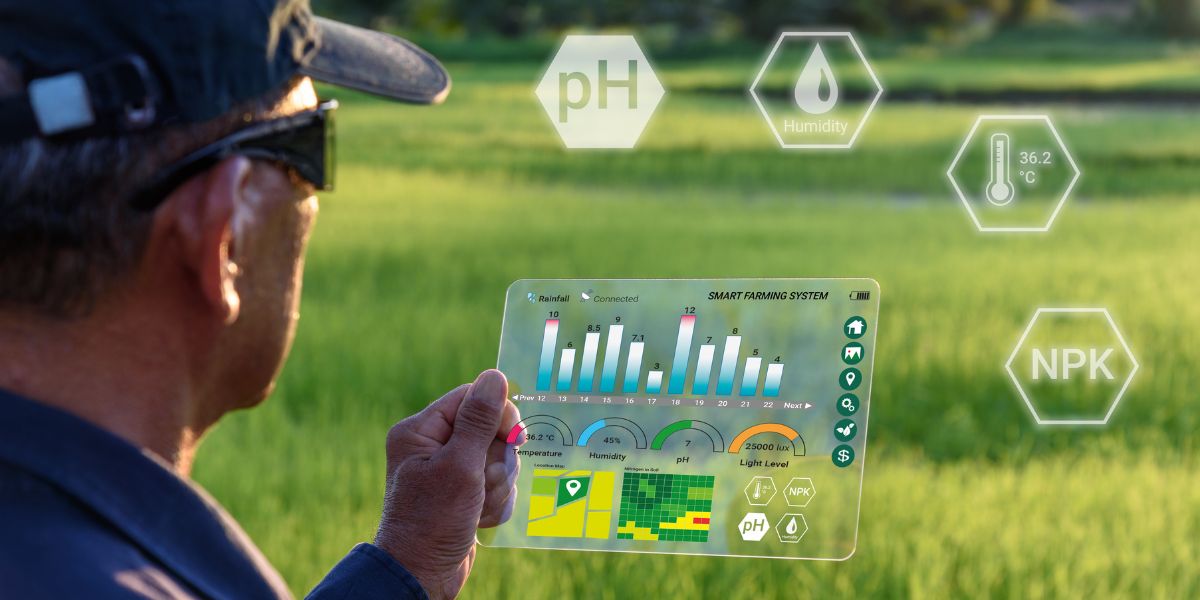
If you are a rural producer and are looking for tools to optimize production in livestock, this post is for you! IoT technology (Internet of Things) has revolutionized several sectors of the economy, including agribusiness. With it, it is possible to collect real-time data about your herd and make more assertive decisions. In this article, we will present the main IoT tools that can help you increase the efficiency of your livestock production. Come on?
What's IoT?
IoT, or Internet of Things, refers to the interconnection of everyday devices and objects with the internet. With the popularization of the internet, several technological innovations have emerged that allowed the connection of objects to the network, allowing them to be monitored and controlled remotely. Agriculture has not been left out of this trend and it is already possible to find several IoT tools aimed at the sector.
The great advantage of using technology in livestock is the possibility of obtaining real-time data on the herd, which allows to make more assertive decisions regarding the climatic conditions, food and health of animals. In addition, another advantage is the reduction of operating costs, since the management of the herd can be done remotely, without the need to hire additional labor.
How can IoT tools help livestock?
Livestock is an economic activity that benefits from technology to increase productivity. IoT (Internet of Things) tools are increasingly used in livestock, as they allow you to monitor animals remotely and automate tasks such as feed supply and cleaning stables.
The use of these tools can significantly reduce operating costs, improve the quality of the milk and meat in addition, IoT tools can also contribute to animal welfare by monitoring animal behavior and alerting farmers to potential health problems.
What are the main features of IoT tools in livestock?
The main features of IoT tools in livestock are:
- Real-time monitoring - IoT tools allow producers to track and monitor animals in real time, enabling more efficient and optimized decision making.
- Data analytics: IoT tools also allow producers to analyze the data collected, which helps identify problems and boost productivity.
- Two-way communication: IoT tools allow producers to communicate directly with animals, which facilitates herd management.
- Remote control: IoT tools allow farmers to control their animals from a distance, which is ideal for large farms.
What are the benefits of using IoT tools in production?
The use of IoT tools in agricultural production brings numerous benefits to farmers. With them, it is possible to monitor and collect accurate data on the environment and the performance of animals, as well as automate repetitive tasks and maintain an accurate digital record of farm activities. This allows producers to make more informed decisions on how to improve farm productivity and ensure the health of animals. IoT tools also offer greater safety on the farm, as they allow the tracking of assets and the identification of problems before they cause irreparable harm.
Examples of IoT tools in livestock
Livestock is one of the fastest growing agricultural activities in Brazil. According to the Ministry of Agriculture, Livestock and Supply, the sector had a 4.8% increase in beef production in 2017. And this only tends to increase, thanks to technological innovations that are being developed for the sector.
One of these innovations is the use of the Internet of Things (IoT) in livestock. The IoT consists of a set of internet-connected devices that collect and exchange data with each other. These devices can be sensors, such as those that measure temperature and humidity, for example. Or they can be actuators, such as machines that regulate the irrigation of fields.
The use of IoT in livestock brings several benefits to farmers. With this technology, it is possible to have an accurate control of all aspects of production, such as the number of animals, what they are eating and the health of each one. In addition, IoT allows you to monitor the climate and soil quality to ensure that the right measures are taken to produce a healthy animal.
Some of the main tools to use in livestock are:
- Sensors: These are devices that collect information about temperature, humidity, atmospheric pressure, etc.This data can be used to predict possible problems in the herd.
- Actuators: These devices perform automated tasks at specific stages of animal production. For example, they can control the use of water and light in sheds.
- LOCAL ANIMAL IZATION PLATFORMS: These platforms use GPS technology to monitor animals, allowing them to be tracked with ease.
- HEALTH MONITORING SYSTEMS: These systems use sensors to monitor the health status of animals and detect diseases early.
- MOBILE APPLICATIONS: Mobile applications allow you to manage all phases of animal production in a simple and intuitive way.They can also provide information on markets, suppliers and other important issues related to livestock.



