

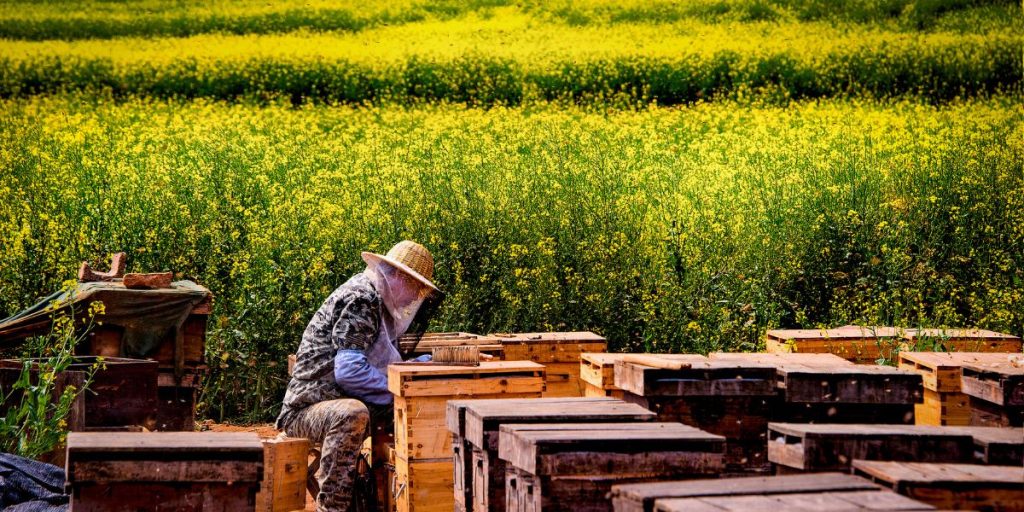
Beekeeping is the term used to describe the activity of producing food and honey-based products by bees. This is a practice that has thousands of years and that, even today, offers many advantages for those who perform it. In this article, we will know a little more about the history of beekeeping as well as its importance for Brazilian livestock.
What's beekeeping?
Beekeeping is the activity that involves the creation of bees, which are responsible for the production of honey and other derived products. The activity requires the care of hives and bees, in addition to creating an appropriate environment for the development of the same. Beekeeping also involves the processing of honey, wax and other bee products, which are used in the cosmetic, food and medicinal industry.
The importance of activity
Beekeeping is an extremely important activity for the environment and the economy.In addition to being a source of income for many families, the activity also helps in pollination of plants and the production of honey, an extremely healthy food.
Different types of bees
Bees are divided into three main categories: Domestic bees, wild bees and Africanized bees. The former are man-made for honey production purposes, while the latter live in forests and fields around the world.
How is bee breeding?
Bees are created from a process called hive division. This means that a hive is split in half, and the halves are then recombined with other halves to form new hives.
What beekeeping products?
Beekeeping is a livestock activity that involves raising bees for the production of honey and other hive products, such as pollen, wax and propylene.
Honey is the main product of beekeeping and is a natural food rich in vitamins, minerals and antioxidants.In addition, honey has antibacterial and antifungal properties, which makes it a useful ingredient in traditional medicine.Pollen is also rich in nutrients and has anti-inflammatory and immunostimulating properties.Wax is used to manufacture candles, cosmetics and other products. Propoleum is used in traditional medicine as a remedy for various diseases.
Beekeepers in Brazil
Beekeeping is an agricultural activity that involves the creation of bees and the production of their derivatives, such as honey. In Brazil, the activity has gained strength in recent years and has been an alternative for many farmers.
Brazilian beekeeping has been highlighted in the production of honey and other derivatives, such as propolis, pollen and wax. Brazil is the world's largest producer of honey, with a volume of almost 80 thousand tons per year. Sao Paulo is the state with the largest number of beekeepers and also the one that produces the most honey in the country, followed by Minas Gerais, Parana, Rio Grande do Sul and Santa Catarina.
The main inputs used in beekeeping are swarm boxes (which serve to house the colonies), bleaches (to clean the swarm boxes) and special tools to manipulate bees. In addition, beekeepers also need equipment to process and store honey, such as filters, evaporators and stainless steel tanks.
The main challenges faced by Brazilian beekeepers are the lack of government incentive to the activity, the shortage of skilled labor and the increase in input costs. Despite this, beekeeping has been growing year by year in Brazil, showing that it is a viable alternative for many farmers.
Conclusion
Beekeepers need to be careful not to cause harm to the hive and its inhabitants. For this, it is important to monitor the bees and the environment in which they live, feed them properly and create favorable conditions for the development of the activity. Beekeeping can be a very rewarding activity, both for the beekeeper and the bees. It offers a high-quality natural product and at the same time contributes to the maintenance of biodiversity.



