

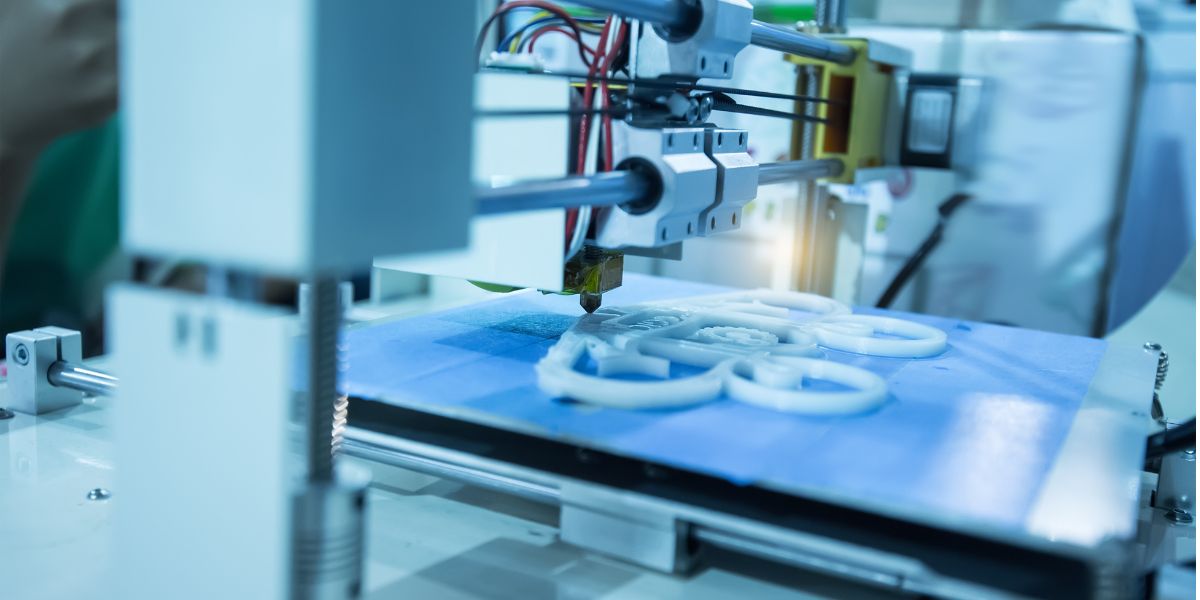
Welcome to our newest post on 3D printing! Today, we are going to talk about an unusual and quite surprising application of this technology: breeding prosthetics for cattle. That's right, you have not read wrong. 3D printing is helping to improve the quality of life of animals on farms and rural properties, allowing them to have a more comfortable and healthy life. Want to know how it works? So keep reading this article!
What is 3D printing?
3D printing is a manufacturing process that creates three-dimensional objects from a digital file.It is a technology that has been used to create prototyping and functional parts in various materials such as plastic, metal and ceramics. 3D printing can be used to create prostheses for livestock, which can help in the treatment of diseases or injuries.
How does 3D printing work?
3D printing is a manufacturing process that allows the creation of three-dimensional objects from a digital model. The process works by adding layers of material until the object is created.
The material used in 3D printing can be plastic, metal, rubber or other material.The choice of material depends on the object being created. For example, a prosthetic for a cattle can be made of plastic or rubber.
The advantage of 3D printing is that it allows the creation of complex objects that would be impossible to create using other manufacturing methods.In addition, 3D printing is faster and more economical than other methods, such as casting.
Applications of 3D printing for livestock
3D printing is becoming increasingly popular and affordable, and this is also being harnessed by animal producers.The technology can be used to create prosthetics for large animals such as cattle.
This is useful because often cattle need special care when one of their extremities is injured or sick. Prostheses allow veterinarians to treat animals more efficiently and less invasively, and help animals adapt to their new conditions.
The technology is also being used to create implants for the bones of animals.These implants are made with a material called bioceramics, which is compatible with the bone tissue of the animal and fuses with it naturally. The implants help injured bones to regenerate and become stronger.
Finally, animal producers are using 3D printing to create devices that can be placed on animals to track their movements.These devices allow veterinarians to monitor the behavior and well-being of animals, helping to ensure they are being treated as best as possible.
Advantages and disadvantages of 3D printing for livestock
3D printing has several advantages for the production of prostheses for livestock. One of the main advantages is the ability to mass produce prostheses with high precision and quality.In addition, 3D printing also allows prostheses to be customized according to the needs of the animal, which can significantly improve the quality of life of livestock.
However, 3D printing also has some disadvantages. One of the main disadvantages is the relatively high cost of technology.In addition, 3D printing requires specialized knowledge and special equipment to function properly, which may pose an obstacle for some people.



