

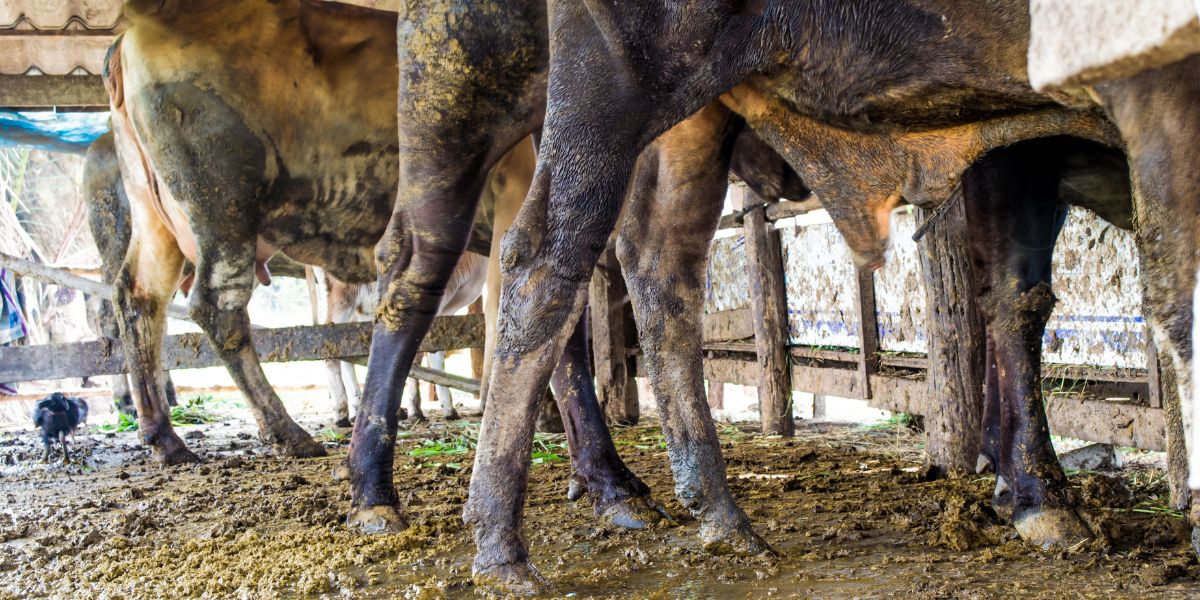
Methane production is one of the main factors contributing to global warming, and livestock has been blamed for much of the emissions.To reduce this contribution, this article will address the management practices that can be implemented to reduce methane emissions in livestock. Find out how our collective efforts are helping to preserve our planet!
What's methane?
Methane is an important gas that is released into the atmosphere during the decomposition of organic matter.It is one of the main greenhouse gases, containing about 21 times the global warming power of carbon dioxide.However, methane has a shorter life time in the atmosphere than CO2 and therefore affects the climate for less time.
Methane emissions in livestock
Livestock is responsible for about 14.5% of methane emissions globally, according to the IPCC. Methane is an important greenhouse gas that has 84 times the global warming power of carbon dioxide in the first 20 years after its release into the atmosphere.Most methane emissions from livestock come from the enterotoxins generated by animals during digestion.
Reducing methane emissions from livestock requires measures to improve the digestibility of food by animals and decrease fermentation rates in the digestive tract. This can be achieved through genetic selection to create more efficient breeds in digestion, the provision of nutrients appropriate to the nutritional needs of animals, and the use of technologies that improve the maintenance of manure, such as storage and composting.
Reducing methane emissions
Reducing methane emissions in livestock can be achieved through the adoption of good agricultural practices and the use of innovative technologies. One of the main ways to reduce methane emissions is to improve feed digestibility, which can be achieved through the formulation of more efficient feed and supplementation with enzymes. Another way to reduce emissions is to manage animal stress, as stress can lead to excessive methane production.To minimize animal stress, it is important to provide a quiet and comfortable environment, as well as access to fresh water and shade.
Methods for reducing methane emissions
Livestock is responsible for about 14% of methane emissions in the world, according to the FAO. In Brazil, this index rises to 24%, according to the survey of the Ministry of Agriculture. Given this scenario, reducing methane emissions in livestock is essential to reduce greenhouse gases and, consequently, contribute to the mitigation of global warming.
There are several methods that can be adopted by farmers to reduce methane emissions in livestock. The choice of the ideal method should consider several factors, such as the size of the farm, the type of cultivation and the climate of the region. Some of the main methods are:
Direct planting: It consists of direct sowing in the soil, without the need to carry out its previous preparation. This type of planting minimizes the operations that cause soil compaction, thus reducing methane emissions.
(Registration of pasture: Consists of using plants, such as oats and millet, to cover soils during winter. Plant cover prevents soil erosion and decreases methane emissions.
Improving the quality of the diet of animals: Changing the composition of the animal feed to include foods rich in protein and low in fat contributes to reducing methane emissions. This is because more efficient digestion results in less gas emitted by animals.
Natural fertilizer use: Replace chemical fertilizers with organic fertilizers, such as cattle manure or horse manure.
Conclusion
Livestock is responsible for about 14% of global emissions of methane, a greenhouse gas 25 times more potent than carbon dioxide.
One of the most effective ways to reduce methane emissions from livestock is animal feed. By feeding animals with hay and soybean meal enriched with omega-3 fatty acids, methane levels in animal faeces are significantly reduced. Another effective way to reduce methane emissions in livestock is manure management.By using advanced manure management techniques such as composting or anaerobic digestion, methane emissions can be reduced by up to 50%.
In addition to animal feed and manure management, there are other ways to reduce methane emissions in livestock, such as using improved technologies, improving animal health and adding sulfur to feed to reduce methane production.



