

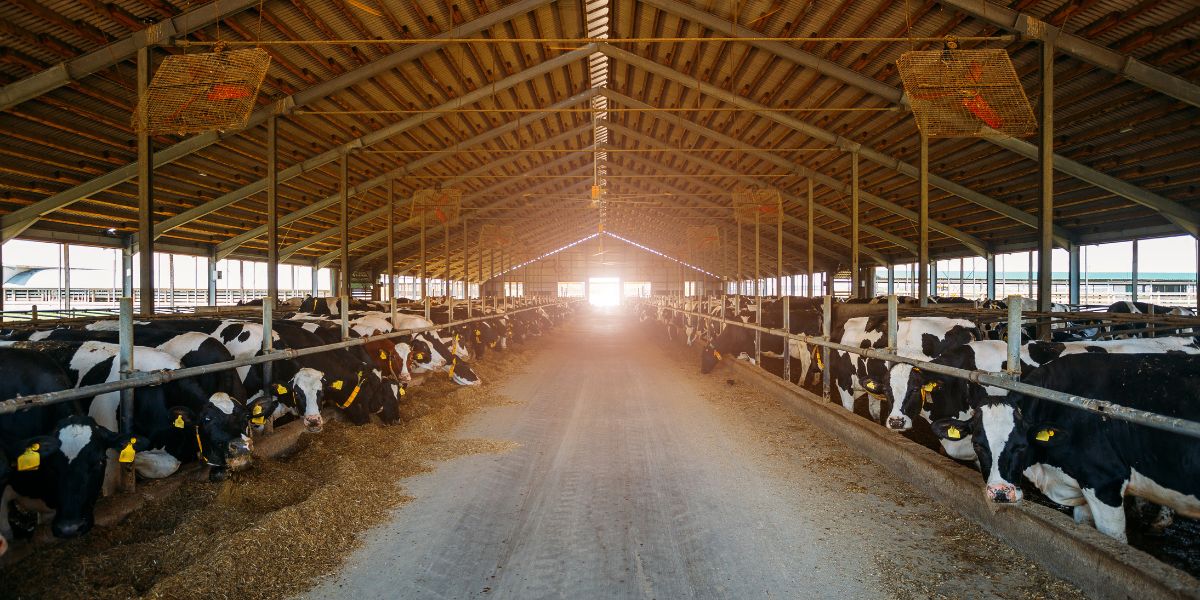
In livestock, ensuring the health and welfare of animals is critical to achieving quality production. One of the main challenges faced by breeders is to quickly identify infection problems that may compromise the integrity of the herd. In this scenario, moisture sensors emerge as an innovative solution to assist in the early detection of these problems. In today's article, we will explore the functioning of these sensors and understand how they can be useful in monitoring the health of your herd!
What are humidity sensors?
Humidity sensors are electronic devices capable of measuring the amount of water present in the air. This measurement can be expressed in terms of relative humidity, dew point or absolute concentration. These sensors can be found in several types, with different operating principles and levels of accuracy.
One of the most common types is the capacitive sensor, which uses a dielectric layer to detect changes in the humidity of the environment. When there is variation in the amount of water in the air, the dielectric constant of this layer also changes and this causes changes in the capacitance of the sensor that are converted into electrical signals.
Another example is the resistive sensor, based on materials whose electrical resistance varies according to environmental conditions.The presence of water in the pores of these materials causes the resistance to decrease proportionally to the amount present in the air.
Optical sensors and semiconductors are other examples used to measure the humidity of the environment. Each type presents its particularities regarding sensitivity, operating range and specific application.
Regardless of the type chosen for use in livestock, sensors represent an important technological tool capable of assisting in the monitoring of environmental conditions related to animal welfare and prevention of health problems.
How can moisture sensors help in identifying infection problems in livestock?
Humidity sensors can play an important role in identifying infection problems in livestock. These devices are able to measure the amount of water present in the environment, which can be used to determine whether or not conditions are favorable for bacterial growth.
Excessive humidity in stables and sheds is a major cause of bacterial and fungal proliferation. Sensors can detect high or low levels in the environments where animals are housed, signaling possible infectious foci.
With this information, breeders can take immediate preventive measures before the disease spreads throughout the herd. For example, they could increase ventilation or reduce the population density of infected animals quickly by receiving accurate sensor information.
In addition, sensors can also help in assessing the quality of food and supplements provided to animals. Excess moisture can harm these products and make them unfit for animal consumption.
In summary, moisture sensors offer a valuable tool for livestock producers to keep their livestock healthy while mitigating harmful environmental risks to animal health.
What are the advantages and disadvantages of using moisture sensors for this purpose?
By using moisture sensors in the rapid identification of infection problems in livestock, there are a number of advantages and disadvantages to consider.
Among the main advantages is the possibility of constantly monitoring humidity levels in environments where animals are raised to prevent the emergence and spread of diseases. This allows preventive measures to be taken more quickly, avoiding economic losses for producers.
In addition, by using these sensors it is possible to reduce the overuse of medicines and antibiotics in animals. As they can indicate when there is a problem in the environment or management of animals before the onset of the disease, it is possible to act proactively without having to treat after it has already occurred.
However, one must be aware of the disadvantages as well. The main one is the high cost of these specialized equipment capable of properly measuring moisture in different areas of the animal environment.
Another negative point may be the constant need for maintenance of the devices to ensure their effectiveness and correct calibration.
Finally, it is worth noting that although sensors are useful in intensive livestock activities, they do not completely replace other important practices such as regular visual inspections by trained professionals or other diagnostic methods complementary to the analysis of moisture in the air or soil.
Producers should carefully consider these factors before adopting this veterinary technology to ensure their financial and health success.
Conclusion
Therefore, we can conclude that the use of moisture sensors is a useful and effective tool in quickly identifying infection problems in livestock.Growers can monitor the humidity of the environment in real time and take preventive measures to keep their animals healthy.
Like all technology, sensors have their advantages and disadvantages, but when used correctly, they help protect livestock health and increase the productivity of producers.
It is important to remember that sensors do not completely replace the careful look of the breeder on their animals and their environment. They should be used as a complementary tool to ensure better results in animal management.
Finally, investing in technologies such as this can bring significant benefits to agricultural production. The care of animal health is essential to ensure safe and quality food for human consumption.



