

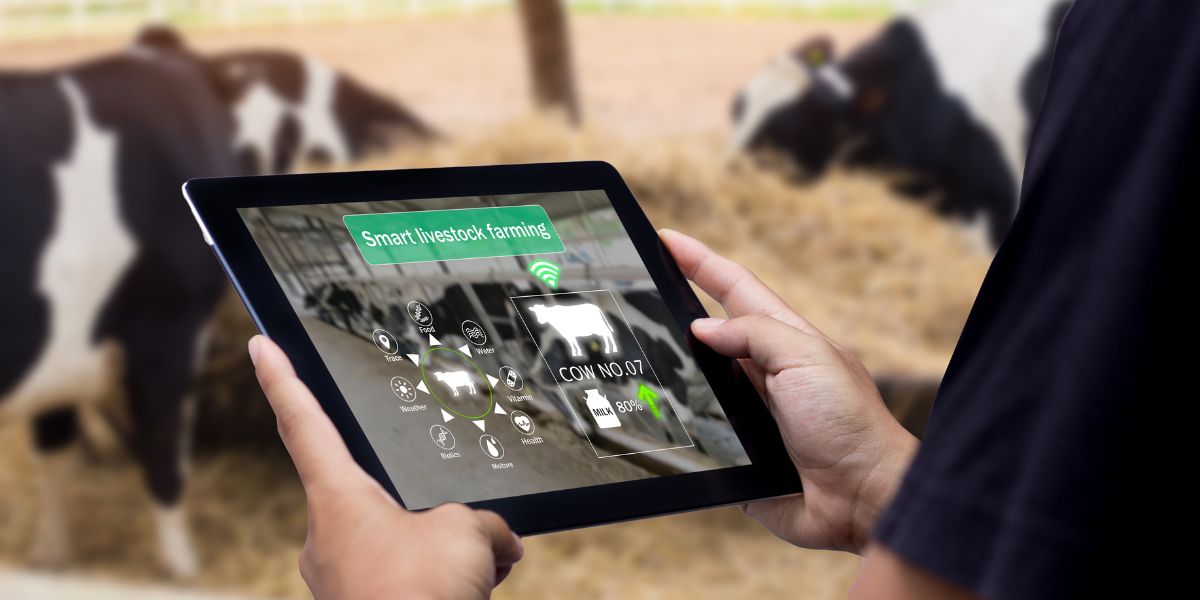
Livestock, one of the most important sectors of world agriculture, is undergoing a radical transformation driven by Industry 5.0 technologies. Livestock 5.0 represents the convergence of advanced technologies such as artificial intelligence, internet of things, big data and robotics applied to animal production. This technological revolution promises to increase the efficiency, sustainability and profitability of livestock, while improving animal welfare and product quality. This article explores the concepts, applications and benefits of Livestock 5.0.
What is Livestock 5.0?
Livestock 5.0 refers to the application of Industry 5.0 technologies in animal production, aimed at automation, digitization and process integration. This approach combines sensors, connected devices, data analysis and intelligent systems to monitor, control and optimize all aspects of animal husbandry, from food and health to management and welfare.
Applications of Livestock 5.0
Livestock 5.0 covers a wide range of applications, including:
- Real-time monitoring: Connected sensors and devices enable continuous monitoring of parameters such as temperature, humidity, air quality, water and food consumption, and animal behavior, providing valuable information for decision making.
- Process automation: Robotic and automated systems can perform tasks such as feeding, milking, cleaning and grading animals, reducing labor and increasing efficiency.
- Early detection of diseases: Machine learning algorithms can analyze sensor and image data to identify early signs of disease, enabling rapid interventions and reducing antibiotic use.
- Feed optimization: Intelligent systems can adjust feed formulation and distribution based on individual animal needs, improving feed efficiency and reducing costs.
- Reproductive management: Technologies such as artificial insemination, embryo transfer and genomic editing can be integrated into intelligent systems to optimize reproductive management and accelerate genetic improvement.
- Traceability and transparency: Data collection and analysis at all stages of production allows the traceability of products, from the farm to the consumer table, increasing transparency and trust in the production chain.
Benefits of Livestock 5.0
The adoption of Livestock 5.0 brings a number of benefits to producers, animals and consumers, including:
- Increased efficiency: Automation and process optimization reduce waste, increase productivity and improve efficiency in the use of resources such as water, energy and food.
- Improving animal welfare: Continuous monitoring and early detection of problems allow for more individualized and responsive management of animal needs, reducing stress and improving well-being.
- Reducing environmental impacts: Optimizing resource use and reducing waste contribute to mitigating the environmental impacts of livestock farming, such as greenhouse gas emissions and water pollution.
- Increased profitability: Higher efficiency, cost reduction and improved product quality can increase the profitability of livestock farming activity, making it more competitive and sustainable.
- Meeting consumer demands: The traceability, transparency and quality assurance provided by Livestock 5.0 meet the growing demands of consumers for safe, healthy and ethically and sustainably produced food.
Challenges and Perspectives
Despite the benefits, the adoption of Livestock 5.0 still faces challenges, such as the high initial investment in technologies, the need for technical training, adaptation to different production realities and data security.In addition, ethical issues related to automation and the use of data need to be discussed and regulated.
The prospects for Livestock 5.0 are promising, with a rapidly expanding global market and a growing demand for technological solutions in animal production. Partnerships between companies, universities and research centers will be key to driving innovation and overcoming challenges.Public policies and incentives will also play an important role in promoting the adoption of these technologies.
Conclusion
Livestock 5.0 represents a technological revolution in animal production, with the potential to transform the way we produce animal-based food.By combining advanced technologies such as artificial intelligence, internet of things and robotics, this approach promises to increase the efficiency, sustainability and profitability of livestock, while improving animal welfare.



