

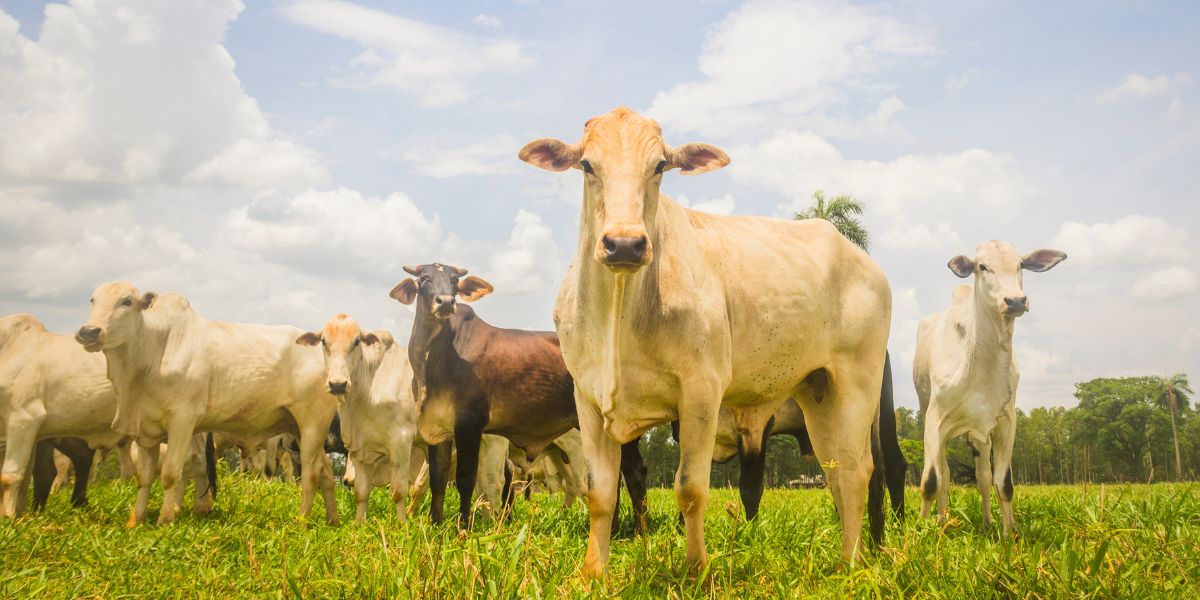
Land use for livestock is an ancient practice, but its environmental impact has been increasingly debated.In this article, we will explore how livestock farming can be done sustainably and what it means for the environment and the future of the sector.
Livestock in Brazil
Livestock in Brazil is an economic activity of extreme importance, representing about 4% of the national Gross Domestic Product (GDP) and being responsible for employing more than 14 million people.
Milk cattle is the main activity of Brazilian livestock, representing about 60% of the total animal production of the country. Brazil is the third largest producer of milk in the world, behind only the United States and China, and the second largest exporter, with an annual revenue of more than US$ 5 billion.
Beef is also an important product of brazilian livestock, being the second largest exporter in the world, behind only the United States. Pork also has a relevant role in the brazilian economy, representing about 7% of the total exports of meat in the country.
The poultry sector is also prominent in the Brazilian economy, generating about US$ 20 billion annually. Brazil is responsible for approximately 8% of the world production of chicken meat and is the main exporter in the world, with revenues exceeding US$ 8 billion/year.
Brazilian livestock also plays an important role in the production of wool, being the third largest producer in the world.Wool is used in various industrial sectors, such as the textile industry and footwear.
Finally, the creation of horses for sports purposes has become a relevant activity in Brazilian livestock. The country has stood out in the main international championships of equestrian, placing itself among the main exporters of this animal category worldwide.
Sustainable development
Livestock is one of the human activities that most impact the environment. Therefore, developing livestock in a sustainable way is fundamental to ensure the future of the planet.
Developing livestock in a sustainable way means producing food responsibly, using natural resources efficiently and minimizing the negative environmental impact of the activity.This includes from the proper use of soil and water, to the management of solid and liquid waste generated by the activity.
In addition, sustainable livestock farming involves animal welfare, creating suitable conditions for animals to live naturally and healthily.This means providing access to fresh food and drinking water, as well as a stress and hazard-free environment.
Sustainable livestock farming also takes into account the socioeconomic development of producers, helping them to achieve greater financial returns using modern management and production techniques.
In short, it is possible to develop livestock in a sustainable way, considering the various environmental, animal and social aspects involved in the activity. This requires appropriate policies to promote the adoption of responsible agricultural practices that preserve the natural conditions of ecosystems and ensure positive results for all involved.
Livestock farming and sustainable development
Livestock farming is an important economic activity for the development of many countries. Livestock farming can also be an important factor for sustainable development, if it is carried out correctly.
Livestock farming can contribute to sustainable development in a number of ways. Firstly, agricultural activity based on animal exploitation can help keep forests intact.This is because, unlike traditional agriculture, livestock farming does not require large areas of land for planting and harvesting.In addition, animals are able to feed on vegetables that have already been cut down, which means that there is no need to cut down more trees to expand pastures.
Another way livestock can contribute to sustainable development is through the production of food products. Animal products such as milk, meat and eggs are important sources of protein for thousands of people around the world.By producing these foods in a sustainable way, it is possible to ensure that the population has access to a healthy and nutritious diet.
In addition, livestock is also responsible for providing raw materials for various industries. For example, the wool of herds are used in the manufacture of clothing and other articles of clothing, while the hair is used in the production of household items.
Therefore, livestock farming can be an important driver of sustainable development if it is carried out in the right way.By adopting responsible production practices, it is possible to ensure a sustainable future for rural communities and agriculture.
Conclusion
Sustainable livestock farming is possible and can be a very useful tool for sustainable development.However, we need to be careful to ensure that livestock is being carried out responsibly and does not harm the environment.



