

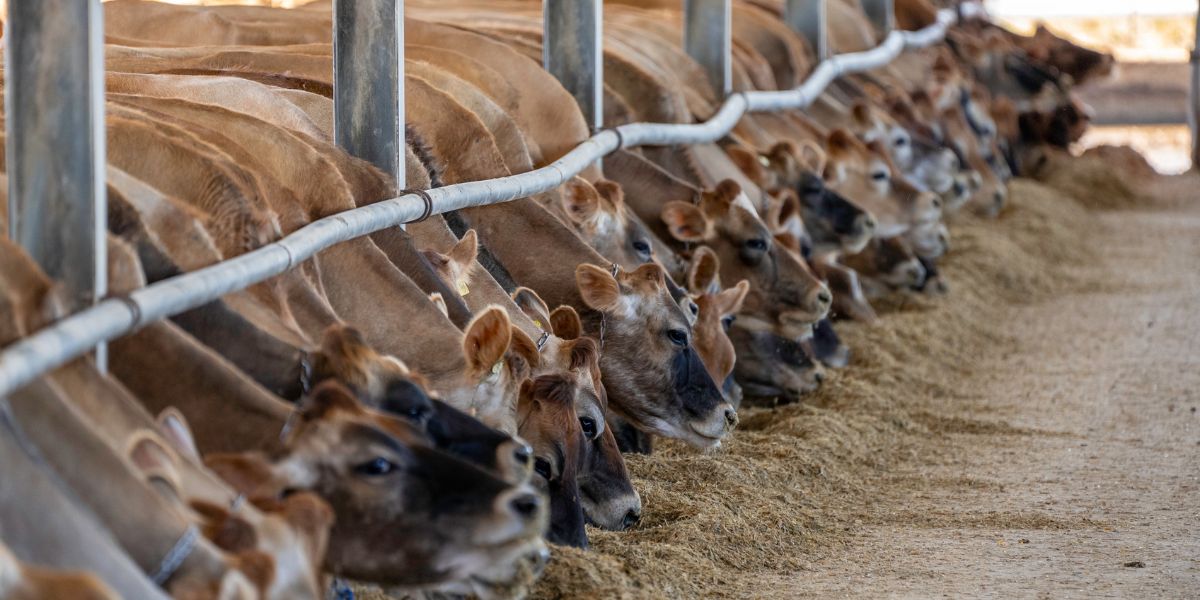
If you are a livestock producer, you know that choosing the right inputs can make all the difference in your production. However, we often end up getting used to the same products and do not think of more efficient and profitable alternatives. That is why today we will rethink the inputs in livestock and find out how to maximize financial results. Prepare for an enriching and transformative reading!
What are inputs in livestock?
In livestock, inputs are the elements that enter the composition of a final product. Generally, inputs are acquired in the market and make up a significant part of the cost of production.
However, it is important to note that not all items purchased on the market are considered inputs. Some items, such as machinery and equipment, can be used directly in production, but are not part of the composition of the final product.
Why rethink the use of inputs in livestock?
Livestock farming is an economic activity that involves raising animals for consumption purposes. The growing global demand for meat and other animal products has generated an intensification of livestock activity in recent years.
The increase in the price of livestock inputs has been a challenge for producers in recent years. This is due to several factors, including the high global demand for meat, the increase in the cost of labor and the scarcity of land available for the activity. Given this scenario, rethinking the use of inputs in livestock is crucial for producers to maximize their financial results.
One way to rethink the use of inputs in livestock is to invest in more efficient nutritional formulations. These formulations aim to increase efficiency in the use of nutrients, allowing animals to obtain greater production with smaller amounts of food. Another way to rethink the use of inputs is to invest in more advanced management practices, which aim to reduce food waste and better take advantage of existing facilities. For example, investing in technology for monitoring animal management can lead to reducing the use of unnecessary treatments and, consequently, saving costs with medicines.
How to plan the acquisition of inputs?
The acquisition of inputs for livestock must be carefully planned to ensure that financial results are maximized. It is important to consider the cost of inputs, as well as the impact they will have on farm productivity. Here are some tips to help you plan the acquisition of inputs:
- Identify the key inputs needed for your farm.This includes food, medicine, equipment and other products.
- Compare the prices of different suppliers to find the best deal.Do not forget to consider the cost of shipping and other possible additional charges.
- Make sure your chosen suppliers offer discounts for larger quantities or special payment terms.These options can allow you to save money on your purchase.
- Establish a budget for the purchase of inputs and follow it strictly. In addition, set limits for maximum prices per product.
- Perform a periodic inventory of inputs to ensure you always have enough supplies in stock. This will also help identify which products need to be purchased more often and which can be purchased less often.
- When possible, make long-term agreements with suppliers to ensure quality and competitive price commitments.
What are the main advantages of maximizing financial results with the use of inputs?
In the agricultural sector, maximizing financial results is a constant goal.To achieve this goal, farmers seek to optimize the use of inputs such as fertilizers, seeds and pesticides.
The use of quality inputs is indispensable to obtain good results in agriculture. However, it is not always possible to find inputs with the ideal cost-benefit. Therefore, often producers need to make difficult choices to save costs and increase the profitability of production.
There are several ways to maximize financial results with the use of inputs. One of the most efficient ways is the use of state-of-the-art technologies, such as GPS systems for monitoring the cultivation and application of pesticides. Another way is to invest in technical assistance programs that offer information on the proper management of inputs, as well as incentives for the acquisition of certified inputs.
The main advantages of maximizing financial results with the use of inputs include:
- Reduction of total cost of production;
- Higher quality and quantity of final products;
- Better use of available resources;
- Optimization of the work routine in the property;
- Increase in productivity and profitability of agricultural production;
- Decrease in losses due to failures in the management of inputs;
- Quality assurance of final products and preservation of the environment;
- Improving the commercial competitiveness of the agricultural sector.
What are the main challenges to optimize the use of inputs
Livestock is a very important economic activity for Brazil, representing about 2% of the national Gross Domestic Product (GDP). However, the productivity of Brazilian farms is still low compared to other countries. According to IBGE data, the average productivity of Brazilian livestock is 33 arrobas per hectare, while the average productivity of the United States is 80 arrobas per hectare.
This means that there is great potential to improve the productivity of Brazilian farms and, consequently, increase the profits of farmers. However, this is not so simple as well. Some of the main challenges to optimize the use of inputs in livestock are:
- Lack of accurate input information: Farmers often lack sufficient information about available inputs and the best ways to apply them. This makes it difficult to make decisions about which inputs to use and how to use them for best results.
- Lack of suitable technologies: Brazilian farms rarely use modern technologies such as drones, sensors and mobile applications, which can help farmers better manage their inputs.
- High input costs: The costs of inputs (such as animal feed, medicines, etc.) can be quite high for Brazilian farms.For this reason, farmers often cannot invest enough in quality or quantity of inputs needed to get good results.
- Difficulty in accessing credit: Many Brazilian farms do not have access to credit lines to finance investments in inputs, such as fertilizers and agricultural equipment.
To optimize the use of inputs in livestock, it is important that farmers have access to the best technologies, accurate information on available inputs and credit lines that enable adequate investment.In addition, it is essential that government authorities develop public policies that encourage farmers to follow sustainable and modernized practices.



