

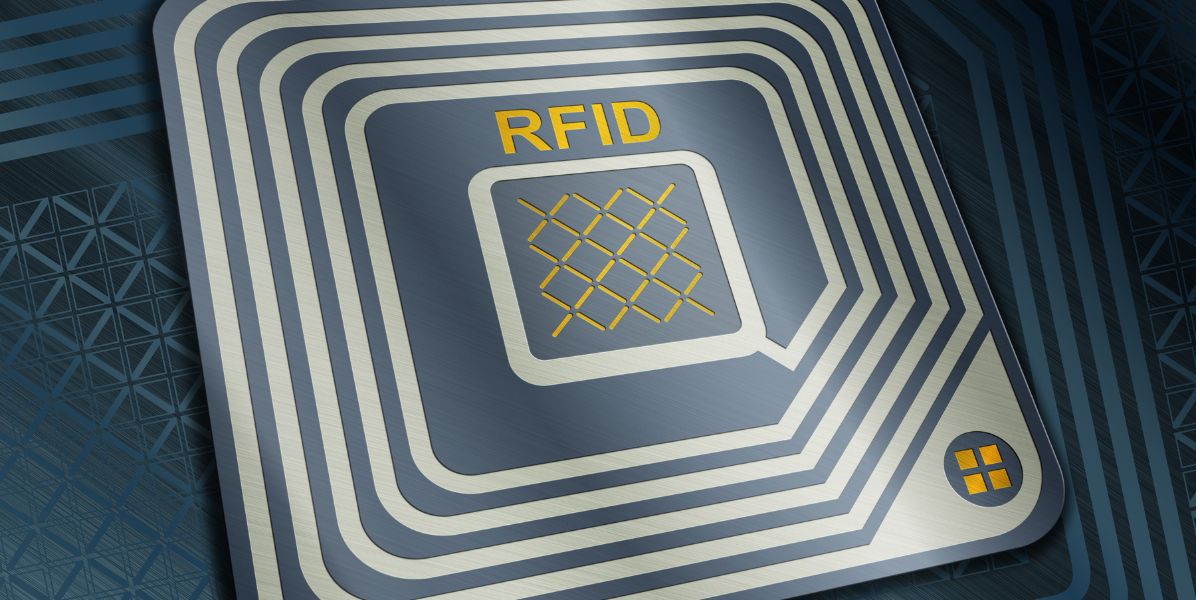
If you are a cattle rancher, you have probably heard of RFID ?Radio Frequency Identification. This technology has revolutionized cattle breeding, bringing more efficiency and automation to the production process. But, after all, what is RFID and how it can help in the traceability and control of your herd? In this post, we will explore the benefits of this tool for your farm and how it can improve the management of your production. Prepare to know a new era in cattle breeding.
What's RFID?
RFID is the acronym for Radio Frequency Identification.It is an automatic identification system that uses electromagnetic waves to transmit data.RFID can be used to track objects, animals or people.
The RFID system works by placing a microchip on an object, animal or person. This microchip contains an antenna that receives electromagnetic waves emitted by the RFID reader.The RFID reader converts the electromagnetic waves into data that can be stored in a database.
RFID's History
The history of RFID dates back to the 1940s, when the development of a vehicle tracking and control system in the Second World War was started.However, the first commercially viable system was developed in the 1960s by Dorne & Margolin Inc. The system used a transmitter and a receiver to monitor moving objects.In 1973, the Motorola company launched the first embedded memory chip, which allowed data to be stored directly on the device.In the 1980s, RFID began to be used more often in industrial environments, and in the 1990s it gained greater acceptance in the RFID storage capacity.
The Advantages of RFID
The advantages of RFID are numerous, but we highlight here some that we consider important:
1. Increased productivity: RFID technology allows greater control over the herd, which leads to better management and, consequently, increased productivity.
2. Better milk quality: constant monitoring of animal health conditions allows problems to be detected and treated quickly, thus ensuring a better quality of the milk produced.
3. Cost reduction: the use of RFID eliminates the need for labor for manual tracking of animals, significantly reducing operating costs.
4. Greater accuracy in data: with RFID it is possible to obtain real-time data on the location and state of each animal, which allows to make more accurate decisions based on accurate information.
5. Greater security: the security of the property is increased with the use of RFID, as all animals will be properly identified and registered in a secure database.
How RFID Works?
RFID is a technology that allows the traceability and control of animals in a herd. RFID works by reading and recording information on a chip, which can be implanted in the animal. This chip contains data such as the animal's number, date of birth, sex, race and other important information. The reading of this chip can be done by an RFID reader, which sends the information to a database. In this way, farmers can have access to the information of animals in their herd in real time, which allows better control and management of the same.
What's RFID's cost?
RFID is a relatively new technology and as such is still in development. However, there are already some RFID solutions on the market and the cost varies greatly. A complete RFID solution for tracking cattle can cost between US$ 500 and US$ 5,000.00, depending on the number of animals to be tracked and the complexity of the system.
RFID's implementation
The implementation of RFID in cattle breeding is a relatively simple and inexpensive process.It is important to remember that RFID does not replace the genealogical record, but complements it.
The first step is the acquisition of the necessary equipment, which are: an RFID tag for each animal, an RFID reader and data management software. The tag can be implanted in the animal in two ways: inserting it into the ear of the animal or placing it on the horn. The second method is more costly, but also more accurate.
Once the animals are properly identified, the data can be recorded in a database. These data will allow the tracking of the animal from birth to sale, providing valuable information on productivity and meat quality.In addition, RFID facilitates the control of animal ownership, the identification of diseases and the isolation of sick animals.
The implementation of RFID can also improve the quality of the final product, as it allows breeders to track the history of vaccines and medical care applied to the animal.In addition, the information provided is valid for buyers, as it ensures that a healthy animal is being sold.
In short, deploying RFID in cattle breeding is beneficial for everyone involved.Farmers can better monitor their herds and provide valuable information to buyers.RFID also promotes animal welfare and ensures that only healthy meat reaches the table of consumers.
RFID's Challenges
RFID technology is becoming increasingly popular as an effective way to track and manage animals on farms. However, deploying RFID brings with it some challenges.
1. Ensure the reading of RFID tags
2. Control the cost of equipment and labels
3. Ensure interoperability between the various RFID systems



