

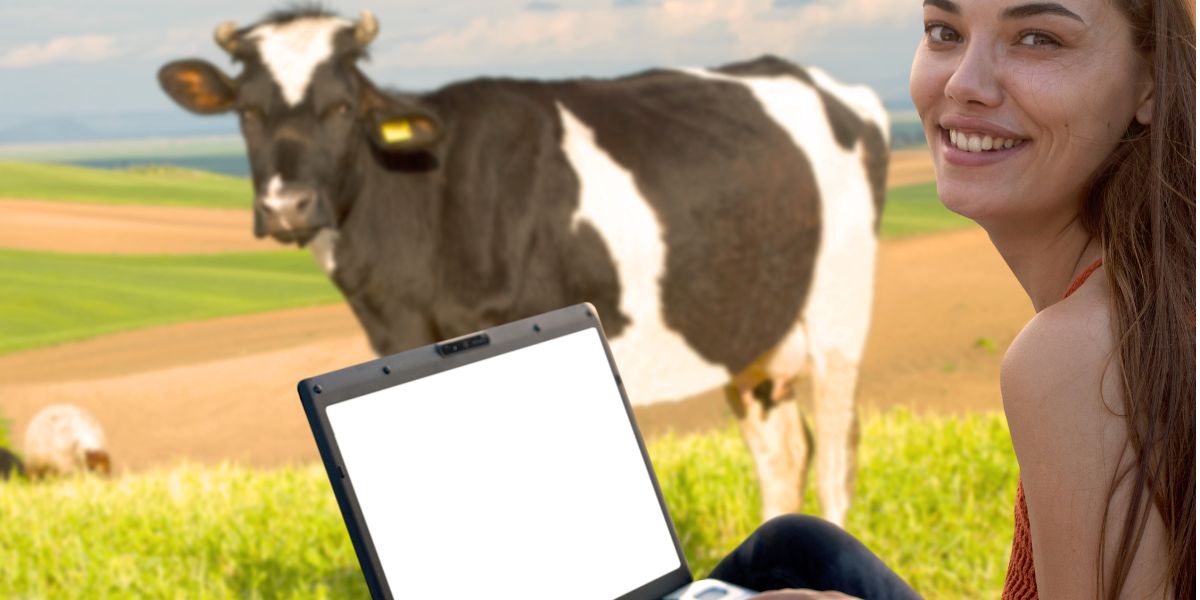
Who said that the field can not be high-tech? With technology increasingly present in our lives, it's time to turn your farm into a smart farm! In this post, we will explore all the possibilities to optimize your operations with innovative and connected solutions. Prepare to take a digital leap and increase your productivity like never before!
Introduction
With the recent popularity of smart farm systems, many farmers are wondering if they should invest in technology to improve their production.Before making a decision, it is important to consider the costs and benefits of this technology.
The main benefits of transforming a farm into a smart farm are:
1. Improved production efficiency & efficiency & OW With the use of sensors and other technologies, smart farms can collect real-time data on soil, climate and plants.This allows farmers to take action quickly to maximize productivity.
2. Reduced operating costs & Smart farms use less water and energy as farmers can monitor consumption and manage operations more accurately.This can lead to significant savings in operating costs.
3. Increased food security & Smart farms allow farmers to increase monitoring of their crops, meaning they can quickly identify and treat problems with disease outbreaks before they spread.
4. Improved product quality & O. With the use of smart technologies, farmers will be able to produce healthier and more nutritious products as they will have greater control over environmental and nutritional conditions.
5. Connecting with global markets & Transforming to a smart farm also allows farmers to connect with global markets faster and more affordably. This can result in greater exposure to their crops, which can lead to increased demand and higher prices.
Why invest in a smart farm?
Smart farms are becoming increasingly popular among farmers and food producers.This is due to the fact that they offer many benefits, such as higher productivity, cost reduction, better control of food quality and the environment.In addition, smart farms are able to adapt to climate change and soil conditions, which makes them more resilient.
The main technologies involved
With the recent popularity of the Internet of Things, many people are wondering how it can be applied to agriculture. Precision agriculture is a term that describes the use of advanced technologies such as sensors and data analysis to improve agricultural outcomes.
The main technologies involved in smart farming are:
''Sensors: sensors are devices that can measure various parameters of the environment, such as temperature, humidity, luminosity and soil quality.They are essential for collecting accurate data on the environment in which plants are growing.
Automated control systems: automated control systems can monitor the data collected by sensors and use them to control the environment in which plants are growing. For example, control systems can turn lights on and off as needed to ensure the best amount of light for the plant.
Data analysis: data collected by sensors is analyzed using advanced algorithms to generate accurate insights into plant performance. These insights enable farmers to make informed decisions about how to optimize their agricultural production.
Robotics has been used in agriculture to automate repetitive tasks such as irrigation and harvesting.In addition, autonomous robots are being developed to assist in monitoring fields and performing precision work such as pruning trees.
''Internet of Things: the IoT (Internet of Things) allows devices to connect with each other, sharing data and remotely controlling other devices.This technology is essential to provide connectivity and real-time monitoring of smart farms.
How to implement a smart farm on your property
The smart farm is a farm that uses technology to monitor and manage production processes.This allows farmers to make more efficient decisions and optimize production.
A smart farm can use sensors to monitor soil, water and air conditions.It can also monitor weather and weather conditions.This provides valuable information on how environmental factors affect planting and harvesting.
Smart farms are also starting to use drones and robots to perform field tasks such as fertilization, spraying and harvesting.These technological tools allow farmers to perform these tasks more accurately and with less waste.
To implement a smart farm on your property, you will need to invest in some equipment. This includes sensors, drones and robots. It is important to have a good Internet connection to perform real-time analysis and to access data from other smart farms that are nearby.
You can also use software solutions such as ERP (Enterprise Resource Planning) or farm management systems to make it easier to monitor production.These systems allow you to track production processes and make more informed decisions about how to improve your property.
In addition, it is important to have a preventive maintenance plan for your technological equipment and ensure that it is working properly.
Smart farm solution providers
Precision agriculture is one of the areas where information technology is becoming increasingly important. One of the reasons for this is the increased demand for food, especially in emerging countries. Another reason is the increased complexity of agricultural operations, due to climate change and the increasing pressure to reduce environmental impact.
Precision agriculture can be defined as the use of information and communication technologies to improve soil, water, nutrient and plant management.The tools include sensors, drones, robotics, data analysis software and artificial intelligence.
Smart farms are an example of how precision agriculture can be implemented in practice. A smart farm uses technologies to automate tasks, monitor environmental parameters, control pests and diseases, among other applications.
There are several smart farm solution providers.Some examples include John Deere, Trimble Connected Farm, AGCO Fuse Technologies and Ag Leader Technology.These companies offer precision agriculture equipment, monitoring software and remote control to operate the agricultural machines.
Final considerations
With the popularization of the Internet of Things, many farmers have wondered how technology can transform their farm. The answer is simple: a smart farm uses technology to monitor and optimize agricultural production processes.
A smart farm can monitor parameters such as temperature, humidity, luminosity and soil to ensure that plants are receiving optimal care.In addition, the technology can be used to automate repetitive tasks such as irrigation and harvesting.This means that farmers can spend less time on operational tasks and more time on strategic planning and other management activities.
Farmers can also use the technology to collect data about their production processes and analyze it to identify areas for improvement. For example, a farmer can monitor soil moisture levels and use this data to adjust their irrigation programs.
Adopting the Internet of Things on farms can also increase security by allowing farmers to receive alerts about potential problems before they occur.
Given all this potential, the adoption of the Internet of Things is a growing trend among modern farmers.In the near future, we are likely to see more smart farms being developed to improve agricultural productivity and ensure the safety and well-being of farmers.



