

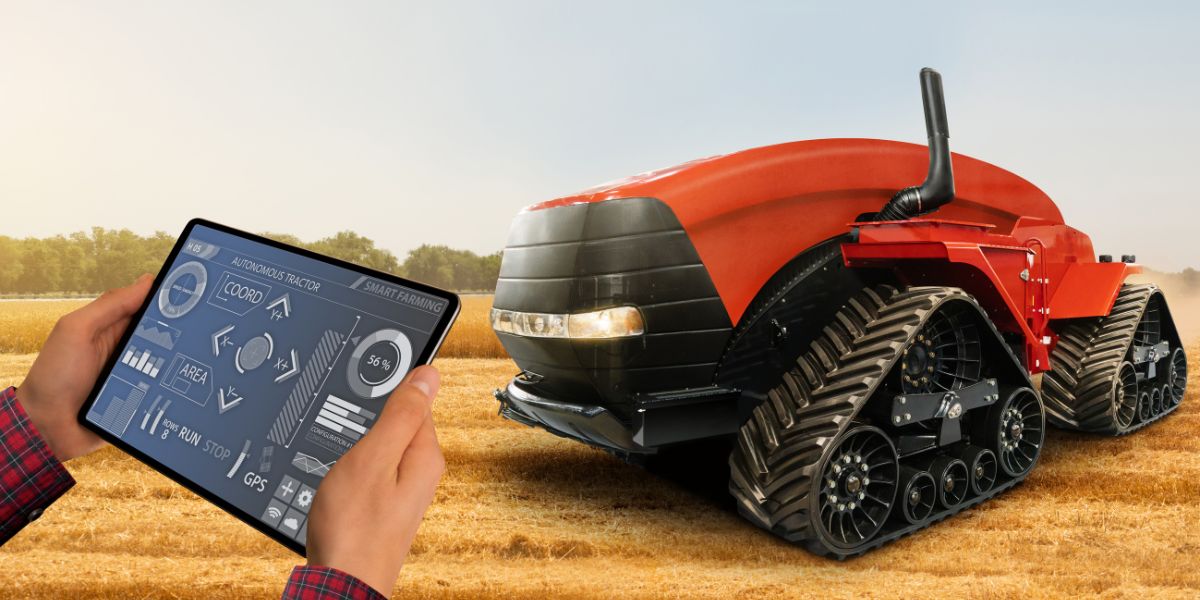
Agriculture is an area that has undergone several transformations in recent years.With the introduction of modern agricultural equipment, such as autonomous tractors, farms have become increasingly efficient.In this article we will know the benefits of autonomous tractors and how they are changing the agricultural sector.
Introduction
Agriculture is one of the most important industries in the world, responsible for producing food for the population. The mechanization of agriculture has been a major concern of farmers in recent years, as it allows them to increase productivity and reduce production costs.
Autonomous tractors are an example of technology that is increasingly being used in agriculture. They are able to carry out the tasks of planting, harvesting and other agricultural activities autonomously, which means that farmers can focus on other activities.
The technology of autonomous tractors is evolving rapidly and is already being used by some agricultural companies in Brazil. However, there is still much debate about whether this technology can be adopted on a large scale in Brazil.
In this article, we will discuss the benefits and challenges of adopting autonomous tractors in Brazilian agriculture.We will also discuss what can be done to make this technology more accessible to rural producers and agricultural companies in Brazil.
What are autonomous tractors?
Autonomous tractors are vehicles that can operate independently without the need for a human operator. These vehicles are equipped with sensors and cameras that allow them to navigate open fields and perform agricultural tasks such as planting and harvesting.Some autonomous tractors can also be equipped with additional tools such as sprayers and rotary hoes to assist in crop care.
How do autonomous tractors work?
Autonomous tractors are vehicles that operate without the need for a human operator. The software embedded in the tractors monitors the surrounding environment and performs the tasks according to the pre-programmed instructions. Operators can monitor the status of the tractor and the task running through a tablet or smartphone.
Advantages of autonomous tractors
Agriculture is an economic activity that benefits from the automation of tasks. Autonomous tractors are a technology that is increasingly being adopted by farmers, as it offers advantages such as:
Reducing operating costs: With autonomous tractors, the farmer can reduce the number of employees required to operate the machines, which results in a significant reduction in operating costs.In addition, the machines are able to work for long periods without stopping, which increases productivity.
Better land use: Autonomous tractors allow greater control over agricultural activities, enabling more accurate and uniform planting. This ensures better land use, reducing waste of inputs and maximizing productivity.
Minimizing risks: Autonomous tractors are equipped with advanced technology that allows effective monitoring of soil and weather conditions.This ensures greater accuracy in the execution of agricultural tasks, reducing the risk of errors or accidents.
Disadvantages of autonomous tractors
Autonomous tractors have several disadvantages compared to their traditional vehicles. First, they are extremely expensive. The costs of manufacturing and maintaining autonomous tractors are much higher than the costs of a traditional vehicle. In addition, autonomous tractors require a large amount of energy to operate, which can be a problem in rural areas with poor accessibility to electricity. Another disadvantage of autonomous tractors is that they can be affected by adverse weather conditions such as snow and rain.
Conclusion
In recent years, agriculture has been increasingly mechanized and automated. Autonomous tractors are an example of this. They are unmanned land vehicles that can perform agricultural tasks such as planting, harvesting and spraying.
The technology of autonomous tractors is developing rapidly and is already being used on a large scale in agriculture. These vehicles offer several advantages, such as reduced labor requirements, higher productivity and lower environmental impact.
With all these advantages, it is easy to see why autonomous tractors are becoming increasingly popular among farmers.However, this technology still has some challenges to overcome, such as safety and task accuracy, before being fully integrated into agriculture.



