

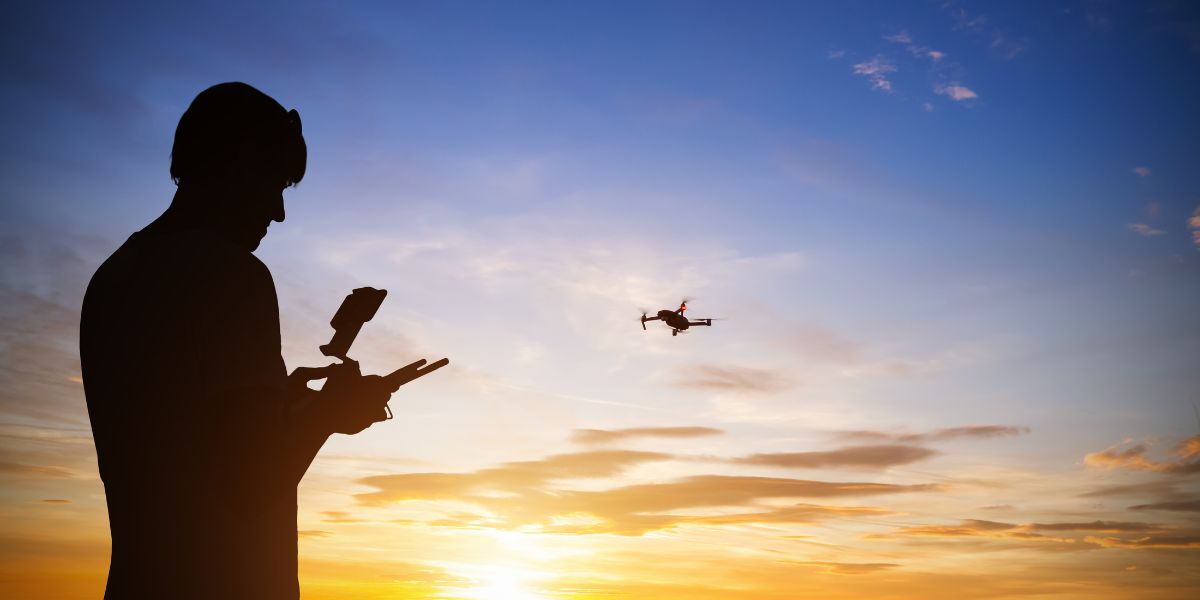
Drones have been increasingly used for various purposes, from photography and filming to parcel deliveries. However, did you know that they can also be used in the distribution of food and supplements for animals? This technology has been gaining ground in the agricultural sector and can bring several benefits both for producers and for the health of animals. In this article, we will explore the possibilities of using drones in animal feed and its advantages and disadvantages. Follow!
What are drones?
Drones are unmanned aircraft that can be controlled remotely or programmed to fly autonomously.They have a variety of applications in different areas, from monitoring territories to deliveries and mapping.
There are several types of drones available on the market, each with specific characteristics to meet the needs of the user. The most common are quadcopters, which have four propellers and are used mainly in photography and aerial filming.
Drones used in the distribution of animal feed are usually larger and have a greater capacity of load. They also have advanced GPS systems and sensors that allow the transport of the supplements directly to the place where the animals are.
Drones have significant advantages when compared to traditional distribution methods such as tractors or trucks.In addition to saving on time spent on deliveries, they also reduce operating costs and increase the efficiency of the service provided to rural producers.
However, it is important to remember that safety in the operation of these equipment should be a priority, especially when we are talking about animal feed. Therefore, it is essential to have professionals trained to carry out activities involving drones in agriculture.
Drones types
There are several types of drones available for the distribution of food and supplements to animals. Each model has specific characteristics that make them more suitable for different situations.
Multi-rotor drones are the most common and popular on the market.They have four or more rotors, which allows them to have greater stability on short and accurate flights.They are ideal for deliveries in urban areas, where it is necessary to maneuver between buildings and other obstacles.
VTOL (Vertical Take-Off and Landing) drones have the ability to take off vertically like a helicopter, but then can lean horizontally like an airplane to increase its speed.These models are ideal for deliveries in rural or hard-to-reach areas, as they allow the drone to land directly in the desired area.
Another important category is that of fix-wing (fixed wing) drones, which look like traditional aircraft.They have greater autonomy and can cover large distances at high speed, being recommended mainly for deliveries in remote or agricultural regions.
Each type of drone has unique advantages that should be considered when choosing which model to use in the delivery of food and supplements to animals. It is important to carefully assess the needs of the delivery site before making this important decision.
Advantages and disadvantages of using drones for the distribution of food and supplements to animals
The use of drones in the distribution of food and supplements for animals has been a growing trend in recent years.This technology provides significant benefits, but also has some disadvantages that must be considered.
Among the advantages of using these devices is the optimization of time and labor. Instead of the handlers need to move over large tracts of land to feed the animals, they can program a drone to perform this task automatically.
Another positive aspect is the possibility of reaching remote or inaccessible areas where animals live.In many cases, land access is complicated or impossible, making the logistics support of drones an efficient solution.
In addition, these devices allow greater control and monitoring of the quantities of food delivered to animals, as well as their overall health through the capture of high resolution images.
However, there are also disadvantages associated with the use of drones in this context.The main one involves regulatory issues: not all countries authorize flights with heavy payloads or overflights on private properties without explicit permission.
The limited life of batteries may pose another problem in the continuous supply of these services, especially in situations where there is an urgent need for fast and safe transportation of goods between locations far from each other.
Finally, another concern concerns the possible interference of drones in the behavior and welfare of animals. The sound produced by the devices can be stressful or frightening for some beings, and should be taken into account before implementing this technology.
Food and supplements for animals that can be delivered by drones
In short, drones are an incredible technology that has the potential to revolutionize the way food and animal supplements are delivered. While there are challenges to overcome, the advantages outweigh the disadvantages.The ability of drones to reach remote areas and deliver food quickly can make life easier for both farmers and their animals.
In addition, there are a variety of food products and supplements that can be delivered by drones.Some options include dry feed, hay, vitamins and even veterinary drugs.
With all this in mind, it is safe to say that the use of drones in the distribution of food and supplements to animals is an exciting development in the agricultural sector.As this technology evolves further, we can expect to see an increase in the efficiency of animal production & everything thanks to the help of these small flying devices!



