

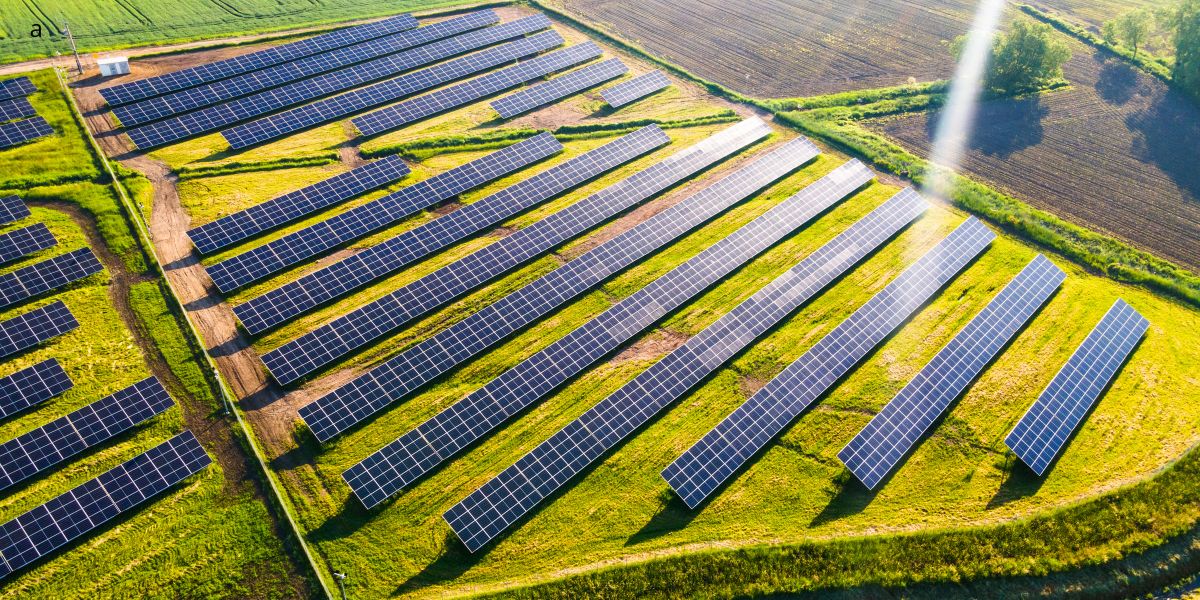
The use of renewable energy on rural properties has gained prominence in recent years.This practice offers significant benefits for both farmers and the environment.
The adoption of renewable sources such as solar, wind and biomass can reduce operating costs and increase the sustainability of farms. Moreover, these technologies allow farms to be more energy self-sufficient.
Implementing renewable energy systems in the field also contributes to the reduction of greenhouse gas emissions.This helps to combat climate change and preserve natural resources for future generations.
Importance of Renewable Energy in the Field
Renewable energy in rural areas brings environmental, economic and energy autonomy benefits. This technology reduces negative impacts on the environment, generates savings for producers and increases the energy security of properties.
Environmental Benefits
The adoption of renewable energy in the field significantly reduces greenhouse gas emissions.Sources such as solar and wind do not release pollutants during power generation.
The use of biogas from agricultural waste reduces soil and water pollution. In addition, renewable energy helps preserve natural resources and local ecosystems.
Installing solar panels and wind turbines has less impact on land use compared to traditional sources.This allows rural areas to maintain their biodiversity and ecological balance.
Economic Sustainability for Rural Properties
Renewable energy provides long-term energy cost savings for rural producers. The initial investment is offset by savings in the electricity bill over the years.
Renewable energy systems require little maintenance, reducing operating expenses.Rural properties can generate extra income by selling the surplus energy to the power grid.
Energy diversification protects farmers against fluctuations in conventional energy prices.Renewable technologies also add value to properties and can attract government incentives.
Energy Security and Autonomy
On-site renewable energy systems ensure reliable supply in remote areas.This reduces reliance on often unstable distribution networks in rural areas.
Local power generation protects against disruptions caused by extreme weather events.Rural properties gain energy autonomy, crucial for operations that rely on constant electricity.
Renewable energy allows modern equipment to operate in areas without access to the electricity grid. This energy independence strengthens the resilience of rural communities and their productive capacity.
Applicable Renewable Energy Sources
Rural properties have a range of renewable energy options available. Each source offers unique advantages and can be tailored to the specific needs of the site.
Solar Energy
Solar energy is a versatile option for rural properties.Photovoltaic panels convert sunlight into electricity, and can be installed on roofs or open areas.
The system can be connected to the power grid or operate independently with batteries.Solar energy is ideal for pumping water, lighting and household appliances.
Initial costs are offset by long-term savings and low maintenance.The efficiency of the panels varies by region and weather conditions.
Wind Energy
Wind turbines harness the force of winds to generate electricity. They are suitable for rural areas with constant winds and available space.
There are models of different sizes, from small turbines for home use to large wind turbines. Energy production varies according to wind speed.
Wind energy can complement other renewable sources, such as solar, and it is important to conduct feasibility studies and consider the visual and sound impact of turbines.
Biomass and Biogas
Biomass uses organic waste to generate thermal or electrical energy. Crops, animal manure and forest residues are examples of biomass.
Biogas is produced by anaerobic decomposition of organic matter into biodigesters.It can be used to generate electricity, heat water or as fuel for vehicles.
These technologies offer a solution for waste treatment and clean energy generation.They are especially advantageous for properties with animal or agricultural production.
Small Hydroelectric Power Plants (PCHs)
PCHs take advantage of the flow of rivers and streams to generate electricity on a smaller scale.
These plants have less environmental impact compared to large hydroelectric plants.The power generation is constant and predictable, provided there is sufficient water flow.
The installation of SHPs requires technical and environmental studies.They can provide power to the property and, in some cases, sell the surplus to the power grid.
Case Studies
Practical examples demonstrate the success of implementing renewable energy on rural properties.These cases illustrate the benefits and challenges faced by farmers and agricultural companies in adopting these technologies.
Adoption of Solar Energy on Farms
The Sao Joao Farm, located in the interior of Sao Paulo, installed solar panels in 2022. With 500 hectares of soybean planting, the property reduced its energy bill by 70% in the first year.
The initial investment of R$ 200,000 had a return in just three years.In addition to the economy, the farm now sells the surplus energy to the local electricity grid.
Solar panels have also been installed on shed and silo roofs, maximizing the use of available space.The farm plans to expand the system to cover 100% of its energy needs by 2025.
Use of Biogas in Agroindustries
The Aurora Agroindustrial Cooperative in Santa Catarina implemented a biogas system in 2023. Using pig waste, the cooperative generates enough energy to supply its operations and 500 local homes.
The biodigester processes 200 tons of waste daily, producing 15,000 m³ of biogas.This results in a generation of 1.2 MW of electricity per day.
In addition to energy production, the system reduces the emission of greenhouse gases and produces biofertilizer. The cooperative saves R$ 1 million annually in energy costs.
Integration of Different Renewable Sources
Fazenda Modelo, in Mato Grosso, adopted a hybrid renewable energy system in 2024. Combining solar, wind and biomass, the property achieved energy self-sufficiency.
Solar panels cover 60% of daytime demand, while three wind turbines provide power overnight. A biodigester processes agricultural waste, complementing generation.
The intelligent management system alternates between sources, optimizing efficiency. The farm saves R$ 300,000 per year in energy and sells the surplus, generating additional income.
Technologies & Innovations
Rural properties have adopted several renewable energy technologies to increase their efficiency and sustainability. These innovations range from solar systems to biodigesters, offering solutions adaptable to different needs and production scales.
Photovoltaic Systems
Solar panels have become a popular option for rural properties, converting sunlight into electricity, reducing costs and dependence on the power grid.
Photovoltaic modules can be installed on roofs or in structures on the ground. Off-grid systems use batteries for storage, while on-grid systems connect to the power grid.
The efficiency of the panels has increased, reaching 22% in commercial models.New technologies such as perovskite solar cells promise even greater efficiencies in the future.
Wind Turbines for Small Properties
Small wind turbines are ideal for rural properties with good wind conditions.They generate electricity from the movement of the blades.
Modern models operate with wind speeds starting at 3 m/s. Vertical axis turbines are more compact and suitable for areas with turbulent winds.
The integration of wind turbines with solar systems can provide continuous power generation. Advances in materials have reduced costs and increased the durability of turbines.
Anaerobic Digesters for Biogas Production
Anaerobic digesters transform organic waste into biogas and biofertilizer.
Biogas can be used for electricity generation, heating or as fuel for vehicles.The process reduces methane emission and produces high-quality fertilizer.
New digester designs allow operation at lower temperatures.Automated systems facilitate the monitoring and control of the digestion process.
Integration of Renewable Systems
The combination of different renewable sources maximizes power generation and stability of supply.Solar-wind hybrid systems are common on rural properties.
Storage technologies such as lithium-ion batteries and green hydrogen complement intermittent generation.
Energy management software helps in decision making, balancing production and consumption.IoT (IoT) integration allows remote monitoring and predictive maintenance of systems.
Challenges and Barriers
The adoption of renewable energy on rural properties faces significant obstacles.These challenges cover financial, technical, regulatory and educational aspects that need to be overcome for successful implementation.
Costs and Initial Investment
The high initial cost is one of the main obstacles to the implementation of renewable energy systems on rural properties.Equipment such as solar panels and wind turbines require substantial investments.
Many farmers struggle to obtain adequate financing.High interest rates and the lack of specific credit lines for rural renewable energy projects further complicate the situation.
The return on investment can take years, which discourages producers with limited resources. This is especially true for small properties where energy consumption is lower.
Energy Infrastructure and Storage
Inadequate infrastructure is a significant challenge in rural areas.Many properties lack robust electrical systems to integrate renewable sources.
Energy storage is crucial to ensure constant supply, but batteries are expensive and have limited life.
Maintaining renewable systems in remote locations can be complicated and costly. The lack of specialized technicians nearby increases downtime in the event of failures.
Regulatory Aspects and Incentive Policies
Regulatory complexity often discourages farmers.The process of obtaining permits and permits can be time consuming and bureaucratic.
The lack of specific incentive policies for the rural sector limits the adoption of renewable energy. Insufficient subsidies and the absence of differentiated tariffs reduce the economic attractiveness of projects.
Frequent changes in legislation create uncertainty for investors and landowners.This makes long-term planning and decision-making on renewable energy investments difficult.
Education & Training
Lack of knowledge about renewable technologies is a significant obstacle.Many farmers are unaware of the benefits and functioning of these systems.
There is a shortage of training programs aimed at the rural sector.This results in a shortage of skilled labor to install and maintain renewable energy systems on agricultural properties.
Limited access to technical information and feasibility studies makes informed decision-making difficult.This can lead to inadequate technology choices or incorrect sizing of systems.
Public Policies and Incentives
The Brazilian government has implemented several measures to promote the use of renewable energy in the rural sector.These initiatives cover support programs, financing options and strategic partnerships.
Government Support Programs
The Incentive Program for Alternative Sources of Electricity (PROINFA) was created to stimulate the development of renewable energy projects. It offers long-term contracts for rural producers who generate electricity from sources such as biomass, wind and solar.
The Low Carbon Agriculture Program (ABC) encourages sustainable agricultural practices, including the use of biodigesters for biogas generation.
The More Light for Amazon Program focuses on electrifying isolated communities using off-grid solar systems.
Financing and Special Credit Lines
The National Bank for Economic and Social Development (BNDES) offers the Finem Renewable Energy credit line. It finances solar, wind and biomass projects on rural properties with reduced interest rates.
The National Program for Strengthening Family Farming (PRONAF) has a specific line for renewable energy.Family farmers can obtain loans to install solar panels or small wind turbines.
Private banks have also created financial products aimed at sustainable agribusiness.These include financing for the acquisition of renewable energy equipment with differentiated conditions.
Public-Private Partnerships
The Energy Research Company (EPE) collaborates with private companies to map the potential of renewable generation in rural areas.
The National Rural Learning Service (SENAR) partners with equipment manufacturers to offer training courses.Rural producers learn how to install and maintain renewable energy systems.
Agricultural cooperatives have signed agreements with energy distributors to develop distributed generation projects.This allows small producers to benefit from economies of scale in the adoption of renewable technologies.
Planning & Implementation
Success in adopting renewable energy on rural properties depends on careful planning and efficient implementation.This involves detailed assessments, well-designed projects and appropriate maintenance strategies.
Feasibility Assessment and Impact Studies
The first step is to conduct a comprehensive analysis of the rural property.This includes:
- Survey of current energy consumption
- Assessment of available natural resources (sun, wind, water)
- Study of local terrain and weather conditions
It is essential to consider the environmental and social impacts of the project. A cost-benefit analysis helps determine the return on investment. Consultation with experts and conducting technical studies are essential to ensure the viability of the project.
Design and Design of Systems
Based on the results of the evaluation, the design of the renewable energy system begins. This involves:
- Selection of the most suitable technology (solar, wind, biomass)
- Equipment sizing
- Planning integration with existing infrastructure
It is important to consider the scalability of the system for future expansions.The preparation of an implementation schedule and the definition of clear goals are crucial. The hiring of qualified professionals ensures the quality and efficiency of the project.
Monitoring & Maintenance
After installation, it is essential to establish a monitoring and maintenance plan.This includes:
- Implementation of real-time monitoring systems
- Local team training for basic operation
- Scheduling regular preventive maintenance
The collection and analysis of performance data allows for continuous adjustments and optimizations. It is important to establish partnerships with suppliers for technical support and spare parts. Performing periodic audits helps identify opportunities for improvement and ensure the longevity of the system.
Conclusion
The adoption of renewable energy in rural properties represents a significant advance for the Brazilian agricultural sector. This energy transition brings economic, environmental and social benefits to rural producers and their communities.
Reducing operating costs and greater energy independence are direct advantages for farmers.In addition, the reduction of the carbon footprint contributes to the sustainability of agricultural production.
The use of renewable sources such as solar, wind and biomass diversifies the rural energy matrix. This diversification increases the resilience of properties in the face of possible energy crises.
Government incentives and specific funding lines are key to accelerating the implementation of these technologies. Technical capacity building for producers is also essential to the success of this transition.
Renewable energy in rural areas promotes local development and the generation of skilled jobs. This change strengthens the rural economy and improves the quality of life in the countryside.
The integration of renewable energy systems with sustainable agricultural practices creates a virtuous production cycle. This model can serve as an example for other sectors of the Brazilian economy.



