

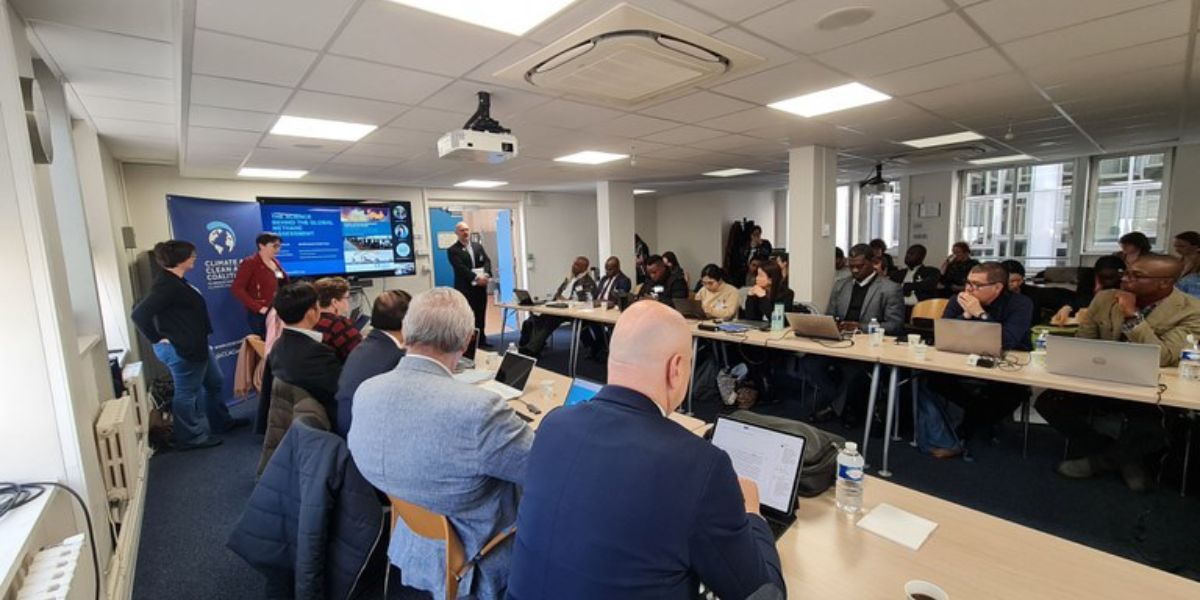
The Ministry of Agriculture and Livestock participated in the Methane Workshop, an event promoted by the Climate and Clean Air Coalition linked to the UN Environment Programme, from February 21 to 24, in the French capital Paris.
The Secretary of Innovation, Sustainable Development, Irrigation and Cooperatives of Mapa, Renata Miranda, presented the current initiatives for the use of new sustainable technologies in Brazilian agriculture. Among them, the Sectoral Public Policy on Agriculture and Livestock on Climate Change and the ABC+ Plan stand out.
The goal of reducing methane emissions in Brazil has resulted in the adoption of strategies and technologies, such as genetic improvement of the herd and pastures, treatment of animal waste, intensive finishing. These practices are increasingly improved through international public policies and recent cooperation programs that provide research, development and innovations.
“We have sustainable solutions in Brazilian agriculture that minimize the impacts of climate change and contribute to the goals set out in the Global Methane Agreement. We have already made progress in sustainable intensification in livestock, as we reduce methane emissions per animal and, at the same time, increase productivity. Brazil is a key part of the solutions to this global challenge”, says Renata Miranda.
The involvement of tropical science in international forums is fundamental to balance and deepen the conversations about food security in the face of the effects that agribusiness can suffer from climate change. The workshop is essential not only to share experiences, but also to show the world the commitment of the Brazilian rural producer with sustainable productions. Sustainability adds value to properties and opens new business opportunities.
The Mapa team was also represented by the Director of Sustainable Production and Irrigation (Depros/SDI), Sibelle de Andrade Silva, and the Strategy Superintendent of the Brazilian Agricultural Research Company (Embrapa), Bruno Brazil.
At the 26th United Nations Climate Change Conference (COP26) in 2021, the Global Methane Agreement was signed. By 2030, it aims to support voluntary actions that result in the reduction of global emissions of this gas by at least 30% when compared to 2020 levels. If this goal is reached, there may be a decrease in global warming by about 0.2°C by 2050.
With MAPA information



