

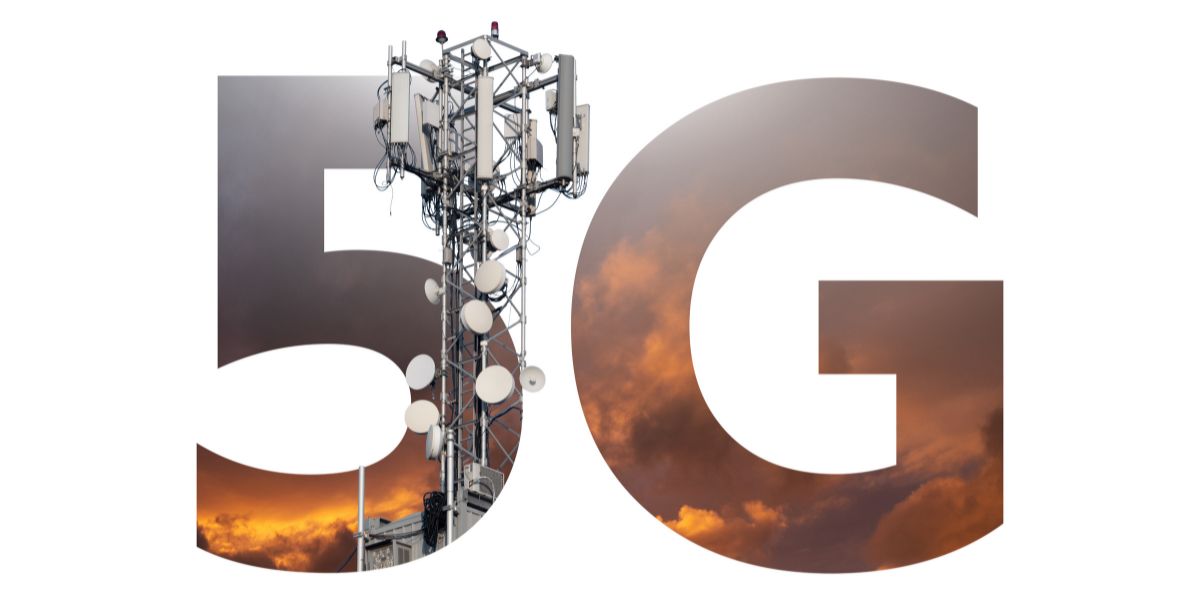
Ready for the future of livestock? 5G is revolutionizing the technology industry and has come to the field! If you want to be ahead of trends and ensure a competitive business, it's time to adopt this innovation. In this post, we will show you how using 5G in livestock can improve the productivity, efficiency and quality of your products. Keep reading to learn more about this powerful technology that is changing the way farmers care for their livestock!
What is 5G?
5G is the fifth generation of cellular technology, designed to support the growing demands of mobile broadband today. With download rates up to 10 times faster than advanced 4G LTE networks, 5G offers an unprecedented experience for applications and services that require high speed and low latency.In addition, 5G can be used to connect millions of devices in a single area, making it ideal for applications such as Internet of Things (IoT), remote monitoring and others.
The benefits of 5G for livestock
With the popularization of 5G, many companies are already implementing the technology in their business. Livestock is not behind and can benefit in many ways with the use of the fifth generation of cellular network.
The main advantage is the higher connection speed, which allows you to perform work in real time without delays.In addition, the latency is lower, which means that information is sent and received quickly.
Another advantage is energy savings.As data is transmitted more efficiently, there is a lower energy consumption, which represents a reduction in operating costs.
In addition, 5G also offers greater data transmission capacity, allowing the transfer of large volumes of information in a short time. This is ideal for monitoring the herd in real time, as well as simplifying data storage.
Another advantage is that with 5G, it is possible to use IoT (Internet of Things) devices, such as sensors and cameras, to monitor animals from a distance. This reduces costs and also helps in preventing diseases.
In short, 5G offers a number of benefits for livestock, enabling faster and more accurate monitoring of animals and greater energy savings.
How to implement 5G on your farm
5G technology is becoming popular and is already available in several cities in Brazil. This type of technology provides faster internet speeds, greater connection capacity and lower latency. With this, it can be a great ally for those who work with livestock, ensuring greater productivity and cost reduction.
For those who are not yet familiar, livestock is a sector of agriculture that is dedicated to the creation of domestic animals for commercial purposes, such as cattle, pigs and sheep. The activity takes into account several factors to ensure the health of animals and thus obtain good results in the production of meat, milk and wool. In addition, it is necessary to pay attention to climatic conditions, as they can directly influence the welfare of animals.
In this context, 5G can be a great solution for your farm, as it offers greater connectivity and mobile internet speed. These features allow you to have access to real-time information such as weather forecast, market news and other information relevant to your activity.In addition, you can rely on remote sensors to monitor the animals on your property, as well as obtaining real-time weather information to make correct decisions when preparing specific food and care.
One of the main benefits is that 5G makes it possible to use technologies that make it possible to automate several important tasks in your business. For example, you can use drones to monitor animals in hard-to-reach places or track cattle with radio frequency identification devices.
If you are interested in implementing 5G on your farm, look for a reliable service provider that meets your needs. They can provide you with all the necessary information about costs, installation and system maintenance. Remember that for the best results, it is important to invest in a system that suits your specific needs.
The main barriers to 5G adoption
With the popularization of 5G technology, many sectors are seeking to adopt it to improve their operations. Livestock is no different, and 5G can bring several benefits to it. However, the adoption of the technology still faces some barriers.
One of the main barriers is the cost. The deployment of a 5G network requires a high initial investment, which can be prohibitive for many producers.In addition, the maintenance of the network also requires a certain investment.
Another barrier is the lack of knowledge about the technology. Many producers do not know how to use 5G in their processing, and end up falling behind. It is important that there is more information and training on the subject so that this barrier can be overcome.
Finally, another big issue is coverage, and there is still no full coverage, and this makes adopting the technology more difficult for those in remote areas.
Although there are these barriers, 5G is a technology that brings many benefits to livestock. It is important that there is investment, information and increased coverage so that it can be adopted by everyone.



